
Free sanitary pads in Campania schools: the motion
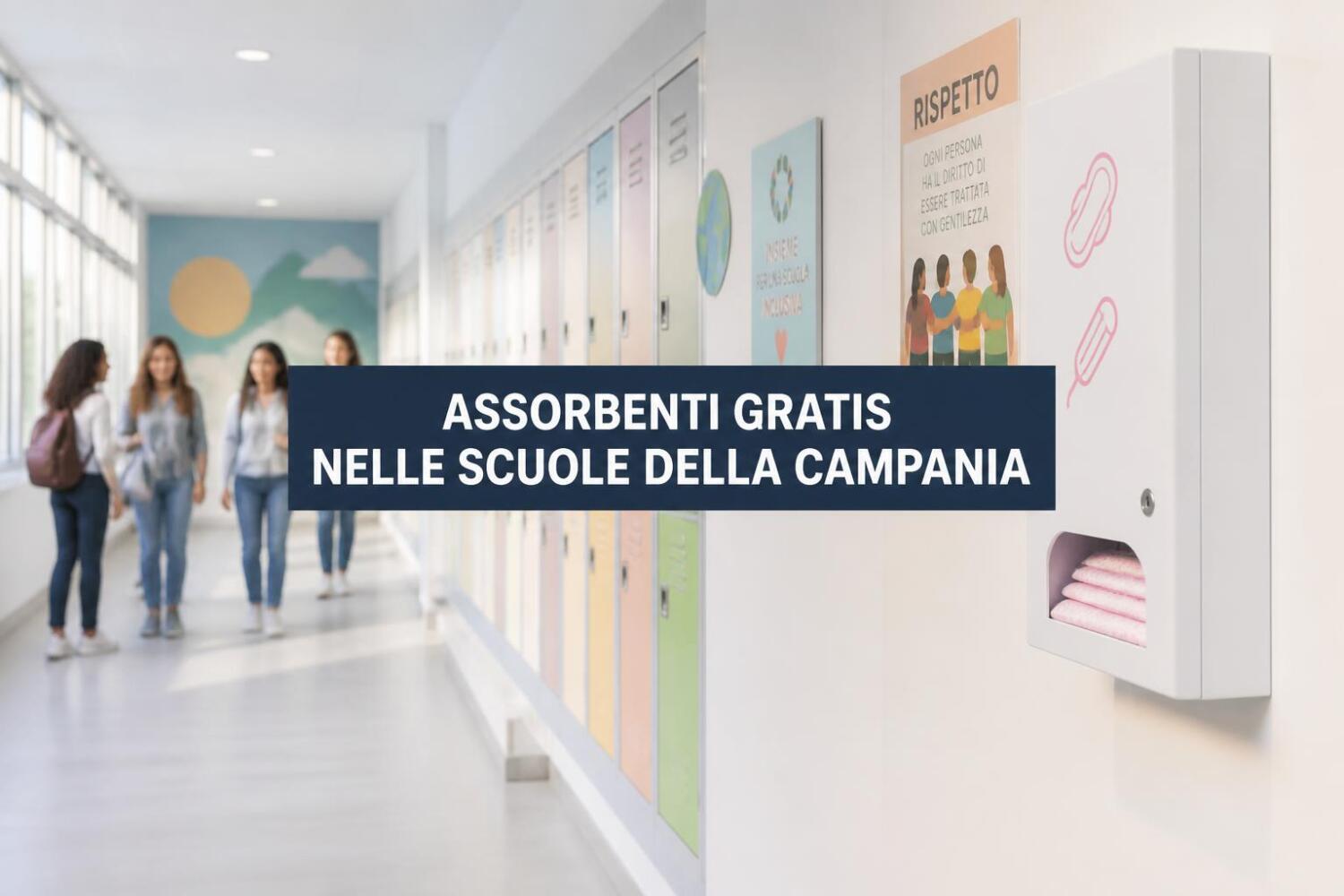
Image created with AI

The Campania Regional Council has unanimously approved a motion introducing a pilot project for the free distribution of sanitary pads in the region's schools. The proposal, presented by Councilor Davide D'Errico , aims to combat period poverty , a phenomenon that affects nearly one in six people in Italy, according to a WeWorld and Ipsos survey. In addition to free distribution, the motion calls for awareness campaigns in schools and commits the Region to seeking a reduction in VAT on menstrual products, currently at 10%. This measure aligns Campania with what has already been done in other Italian regions and several European countries.
What does the pilot project in Campania entail?
The motion approved by the Campania Regional Council calls for the installation of free sanitary pad dispensers in schools that voluntarily participate in the initiative. Each school will be able to decide whether to participate in the pilot project, which will initially involve a limited number of schools to assess its impact before a possible extension. Students will be able to pick up sanitary products at no cost, directly at school. "Menstruation should never become a source of shame, inconvenience, or a reason for absence from school. This is one of the many gender-based injustices we must address," D'Errico stated during the presentation in the chamber. The project goes beyond distribution: it also includes menstrual education campaigns to reduce the stigma surrounding periods and educate girls on how to manage them consciously.
At the same time, the motion requires the regional government to advocate with the national government and institutional bodies to reduce the VAT rate on menstrual products from the current 10% to 4%, bringing it into line with the European average. In Italy, the so-called "tampon tax" remains among the highest in Europe: after being reduced from 22% to 10% with the 2022 budget law during the Draghi government, and briefly lowered to 5% during the Meloni government, the rate returned to 10% in 2024. This represents a significant economic burden for those living in vulnerable economic conditions.
Menstrual poverty: a widespread problem
Period poverty refers not only to the difficulty of purchasing sanitary pads, tampons, or menstrual cups, but also to the lack of clean bathrooms, running water, privacy, and information about periods. According to data from the World Bank, the UN, UNICEF, and Save the Children, approximately 800 million women worldwide menstruate every day , and approximately 500 million lack the necessary conditions to manage their periods safely and with dignity. In Italy, a survey conducted by WeWorld and Ipsos found that nearly one in six people reported having financial difficulties in purchasing menstrual products. This figure highlights how the problem affects not only developing countries, but also Western societies.
Campania is not the first Italian region to move in this direction. Valle d'Aosta , for example, installed free sanitary pad dispensers in all its high schools in 2025. This precedent demonstrates the project's feasibility and could serve as a model for other regions. The Campania initiative is therefore part of a positive trend that is slowly bringing the issue of menstrual justice to the forefront of Italian public debate.
Comparison with Europe
Scotland was the first country in the world to make sanitary pads and tampons free for all women, passing the “Period Products Scotland Bill” in 2020 after having already started distributing them in schools in 2017. Today in Scotland, menstrual products are available free of charge in pharmacies, community centers, and meeting places. France followed suit in 2021, installing 1.500 dispensers in universities and student residences, with a reimbursement for those under 26 and those on low incomes introduced in 2026. Catalonia has been distributing menstrual cups, menstrual panties, and washable sanitary pads free of charge through affiliated pharmacies since 2024.
On the VAT front, many countries have chosen to lower the rate to make menstrual products more affordable. Ireland, Malta, and Cyprus apply 0% VAT. Following the 2021 Ecofin directive that allowed reduced rates for products considered to be public health products, Spain, Poland, and Luxembourg lowered VAT to between 3% and 5%. Germany reduced the rate from 17% to 7%. Italy, at 10%, remains among the countries with the highest rates on the continent, despite essential products generally being subject to a 4% VAT rate.
A step forward for rights
The approval of the motion in Campania represents an important step in the fight against period poverty and gender inequality. The pilot project in schools is a concrete first step that, if extended and consolidated, could change the lives of thousands of students in Campania. Furthermore, the request for a VAT reduction opens a national front that could lead to alignment with European standards. Because menstruation is not a choice, but a physiological condition that should never become an unsustainable cost or, worse, a cause of social exclusion.
Find out more from Napolike.com
Subscribe to receive the latest articles sent to your email.