
The most beautiful villages on the Sorrento Peninsula
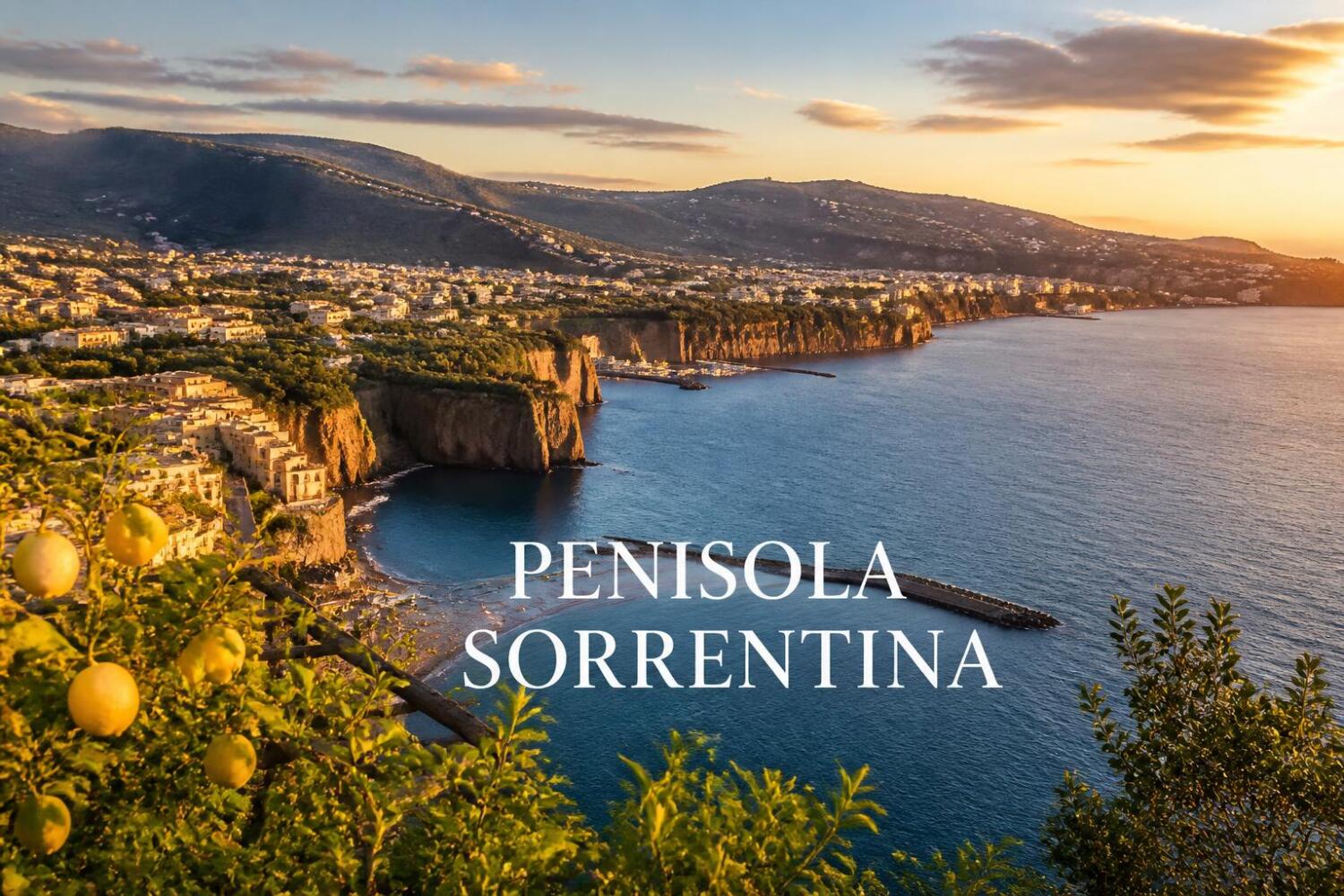
Image created with AI

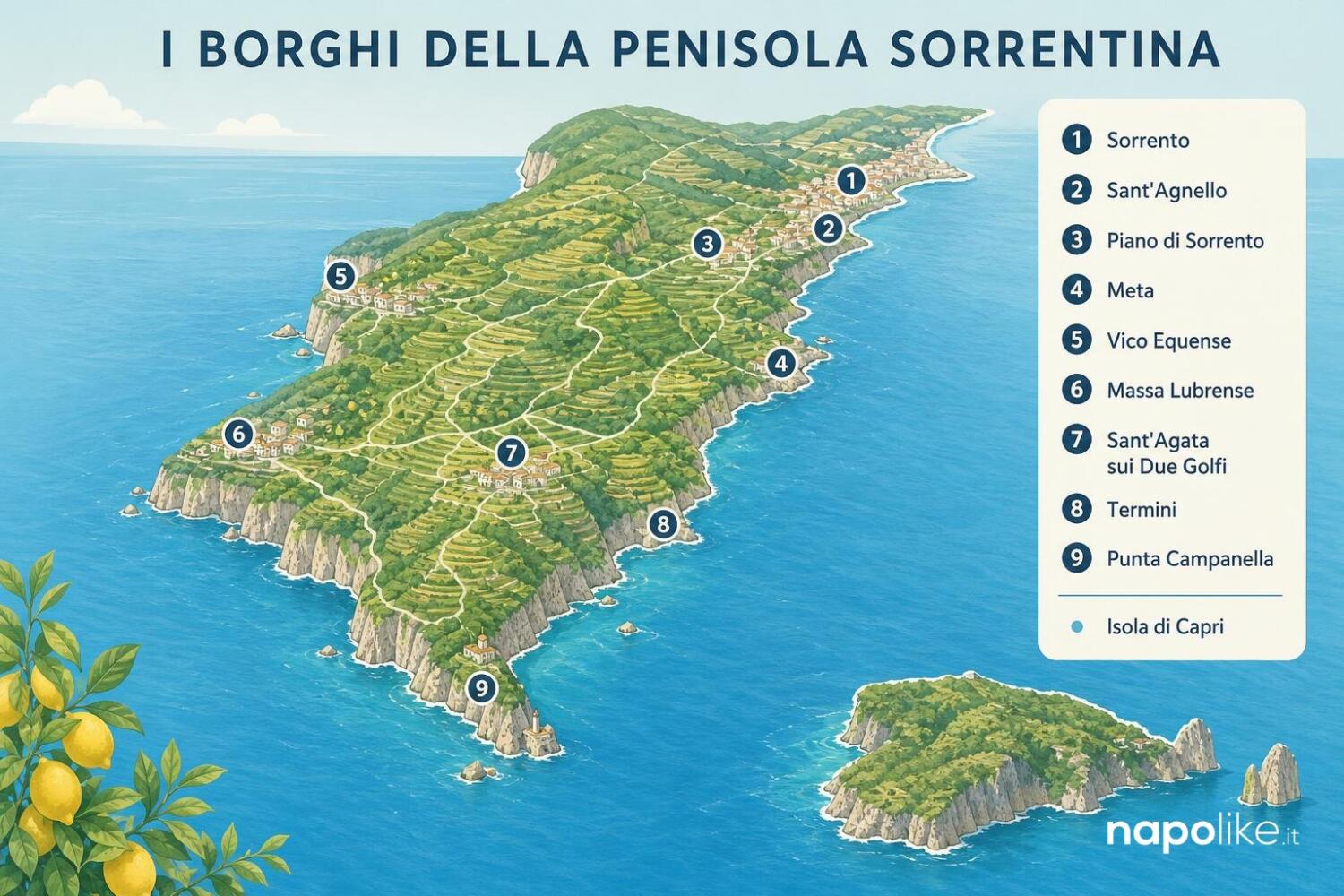
The Sorrento Peninsula is the strip of land between the Gulf of Naples and the Gulf of Salerno , from Castellammare di Stabia to Punta Campanella . Here, villages overlook Capri and the Amalfi Coast, amidst lemon groves, olive trees, and paths overlooking the sea.
In this guide, you'll find the most beautiful villages to visit, along with pros and cons, practical tips, and reviews from those who have already been there. For each town, you'll also find how to get there, how much time to spend there, and the pitfalls to avoid.
The best way to visit them is in stages: the towns are close to each other, on Highway 145, and can be combined in a single day. Those departing from Naples can get there in about an hour on the Circumvesuviana train.
Sorrento
Sorrento is the heart of the peninsula and the most convenient starting point for any excursion. The center is gathered around Piazza Tasso and Corso Italia , with its inlay workshops and historic bars.
Don't miss the 14th-century Cloister of San Francesco and the Villa Comunale , the viewpoint overlooking Marina Piccola and Vesuvius.
The Vallone dei Mulini , a ravine in the heart of the town, and Marina Grande , the fishing village with restaurants on the harbor, are interesting. The Cathedral of Saints Philip and James preserves its 12th-century portal.
Pros: Comprehensive services, Circumvesuviana train from Naples, ideal base for the Amalfi Coast and Capri. Cons: Very crowded in high season, expensive parking, noisy nightlife on summer evenings.
TripAdvisor reviews praise Villa Comunale and Marina Grande, with scores ranging from 4,5 to 5 out of 5. Travelers recommend visiting the center early in the morning and using public transportation to avoid traffic.
Massa Lubrense
Massa Lubrense is the largest municipality on the peninsula and the closest to Punta Campanella , where the land ends and the open sea begins. The capital preserves the 16th-century Cathedral of Saints Philip and James and the Saracen watchtowers that dot the coast.
In the ancient village of Annunziata lies Villa Murat , also known as Villa Rossi, associated with the Queen of Naples. Below the town center, Marina della Lobra is the small port where the catch of the day is served.
The territory is largely within the Punta Campanella Marine Protected Area , with over 100 kilometers of trails between the bays of Ieranto, Mortelle, and Cantone. Boat trips around Capri also depart from here.
Pros: Wild and authentic nature, less crowded than Sorrento, memorable sunsets. Cons: Services spread across a large area, a car is almost essential, and the beaches are rocky and pebbled.
On Google , visitors describe Massa Lubrense as the most authentic peninsula, praising the trails and Nerano's cuisine. Some report that without a car, trips are long.
Sant'Agata sui Due Golfi
Sant'Agata sui Due Golfi is a hamlet of Massa Lubrense, located at an altitude of 390 meters on the ridge dividing the two gulfs. From here, the view extends to Capri , Ischia , and Procida.
The Church of Santa Maria delle Grazie houses a 1600th-century altar by Dionisio Lazzari , featuring mother-of-pearl and lapis lazuli. Above the town, the Convento del Deserto is the lookout point where Nietzsche , Wagner , and Stendhal passed during the Grand Tour.
Below you reach the Marina di Crapolla , reachable only by sea or on foot from Torca via a path of hundreds of steps.
Pros: Unique views of the two gulfs, absolute tranquility, excellent restaurants. Cons: Accessible only by car or bus, and services close early off-season.
TripAdvisor reviews call Sant'Agata the most scenic village on the peninsula, with the church and the Deserto among the most photographed spots. We recommend visiting at sunset.
Terms
Termini is a hamlet of Massa Lubrense at the foot of Mount San Costanzo , 330 meters above sea level, just five miles from Capri. The name perhaps derives from the Latin term "termo ," because the village marks the end of the peninsula towards Punta Campanella.
The Church of Santa Croce , a parish church since 1566, houses a Pietà by Massimo Stanzione above the high altar. At the top of the hill is the chapel dedicated to Saint Costanzo.
The ancient Via Minerva begins in Termini , the road that led to Punta Campanella, passing through the Fossa di Papa, perhaps a Greek necropolis, and Mitigliano, home to the little church of Santa Maria. Below the town, Cala di Mitigliano is one of the most beautiful coves in the area.
Pros: Authentic and uncrowded village, a great starting point for Punta Campanella, and stunning sunsets over Capri. Cons: It's tiny, services are limited, and the streets are narrow and steep.
On TripAdvisor , visitors praise the Piazza Termini viewpoint and the Church of Santa Croce. Many describe it as the peninsula's secret village, ideal for those seeking tranquility.
Termini Station is just a few minutes' drive from Sant'Agata. In the area, you can sample Nerano's seafood and buy typical local products, from limoncello to provola cheese.
Nerano and Marina del Cantone
Nerano is the district of Massa Lubrense most famous for its cuisine: spaghetti alla Nerano was born here , with fried courgettes and provolone del Monaco, served in the restaurants in the Marina del Cantone bay.
The bay is one of the most beautiful on the peninsula, with a transparent sea, a pebble beach and the waters of the Punta Campanella Marine Protected Area , ideal for snorkeling and diving.
The old town climbs the hillside amidst lemon groves and flower-lined alleys; at the top, you reach the Church of San Giovanni Battista and the panoramic viewpoint overlooking Capri and the Bay of Cantone.
Pros: World-famous seafood, picture-perfect bay, snorkeling among the protected seabed. Cons: Very crowded in high season, parking at Marina del Cantone is expensive and fills up quickly, and the road to the bay is narrow.
On TripAdvisor, Marina del Cantone and the restaurants in the bay are among the most awarded destinations on the peninsula, with spaghetti alla Nerano cited as a must-try dish. It's best to arrive early in the morning or late in the afternoon.
Vico Equense
Vico Equense is the largest town on the peninsula, with sixteen hamlets spread between the hills and the sea. Its symbol is the Church of Santa Maria Annunziata , perched on a cliff overlooking the sea, next to the 13th-century Giusso Castle with its frescoed rooms.
On the coast are Marina di Equa and Banco di Santa Croce , among the best diving spots in the Mediterranean. In the upper part, the Terme di Scrajo offer baths in sulphurous waters.
Pros: Less touristy than Sorrento, Blue Flag beach, lower prices for accommodations and food. Cons: The town is steep, the historic center is split between the hills and the sea, and the main road is busy.
Google reviews praise the clifftop church and the Marina di Equa beach. Visitors recommend Vico Equense for those seeking a quiet yet convenient base.
Meta
Meta is a seaside village between Piano di Sorrento and Sorrento, with the upper part called Mulino and the lower part, overlooking the sea, called Casale . Here you'll find the widest beaches on the peninsula.
In the historic center, Palazzo Cosenza , designed by Luigi Vanvitelli , and historic residences such as Palazzo Fienga, Villa Liguori, and Villa Valletta Martini stand out. Marina di Meta is the fishing port with restaurants along the seafront.
Pros: Comfortable and spacious beaches, authentic atmosphere, more affordable prices than Sorrento. Cons: Fewer monuments than neighboring towns, crowded in August, parking is difficult.
On TripAdvisor, Meta is described as a true peninsula, without the high-end shops of Sorrento. People especially appreciate the seafront and the quality of the seafood at the marina restaurants.
Sorrento and Sant'Agnello
The peninsula ends with two quieter towns, often overlooked by itineraries. In Piano di Sorrento, Villa Fondi De Sangro , home to the Georges Vallet Territorial Archaeological Museum , is worth a visit , with a panoramic terrace overlooking the marina.
Nearby are the neoclassical Villa Lauro , the Colonna Castle and the Selva di Santa Caterina , a chestnut forest ideal for walking.
Sant'Agnello , next to Sorrento, is a practical and quiet base, with the Marina di Puolo and the church of Saints Joseph and Teresa.
Pros: Lower prices, less crowds, good connections to Sorrento. Cons: No compact historic center, not very lively at night.
How to organize a tour of the villages
A tried and tested itinerary starts from Meta and Piano di Sorrento in the morning, continues with Sorrento and Sant'Agnello in the early afternoon and ends with Massa Lubrense , Nerano , Sant'Agata and Termini at sunset, when the light on Capri is at its best.
Vico Equense can be visited in another half day, perhaps combined with a swim at Marina di Equa.
For the villages at the far end, you'll need an extra half day: the trail to Punta Campanella and Ieranto Bay requires hiking boots and at least three hours there and back.
If you're looking for ideas on what to bring home, read the guide to the peninsula's typical products and where to buy Sorrento PGI limoncello . The lemon groves of Massa Lubrense also produce Amalfi sfusato , while Capaccio-Paestum is home to Campania's most famous buffalo mozzarella.
FAQ
How much time do you need to see the villages of the Sorrento Peninsula?
A first tour will require two or three days: one day for Sorrento and Sant'Agnello, one for Massa Lubrense with Sant'Agata and Termini, and one for Vico Equense and Meta. With more time, the Punta Campanella trails are worth a visit in their own right.
Which village is best for those who don't have a car?
Sorrento is the easiest option, with train, bus, and ferry connections. Alternatively, Massa Lubrense and Sant'Agata are connected by SITA buses, but services are rarer during the off-season.
When to visit the villages to avoid the crowds?
May, June, and September are the best months. In July and August, traffic on highway 145 and parking become the main problem, especially in Sorrento and Meta.
Is the Sorrento Peninsula suitable for families with children?
Yes, the beaches at Meta and Vico Equense are convenient and well-served, and the trails in Massa Lubrense are suitable for children. It's best to avoid the steps at Marina di Crapolla with strollers.
How do you get from Naples to the villages on the peninsula?
The Circumvesuviana train departs from the center of Naples, stopping at Vico Equense, Meta, Piano di Sorrento, Sant'Agnello, and Sorrento. For Massa Lubrense, Sant'Agata, and Termini, you can take a bus or car.
Find out more from Napolike.com
Subscribe to receive the latest articles sent to your email.