
Caravaggio in Naples: the cursed genius who left masterpieces in the city
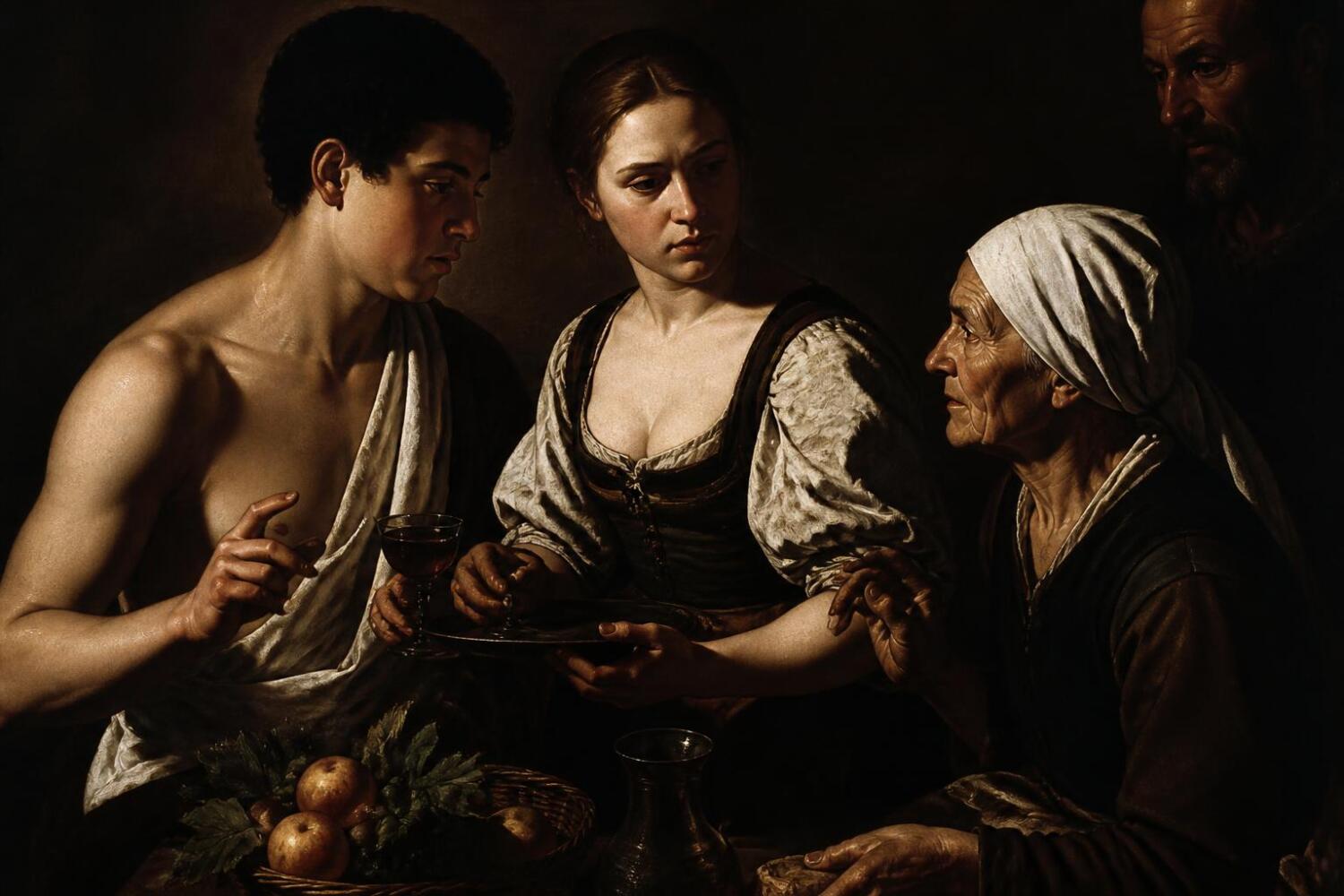
Image created with AI

When Caravaggio fled Rome and became the sacred monster of Naples
In October 1606 , after killing a man in a brawl in Rome, Michelangelo Merisi, known as Caravaggio, fled south. He was unaware that he was entering the most fertile period of his artistic career.
For an artist already famous but also feared—he had already been forced into exile because of his violent character—Naples offered refuge, enlightened patrons, and an urban context that perfectly suited his revolutionary style.
The two Neapolitan stays
Caravaggio remained in Naples for two distinct periods :
- First stay (October 1606 – June 1607): approximately eight months of intense creative activity that profoundly influenced seventeenth-century Neapolitan painting.
- Second stay (October 1609 – summer 1610): Shortly before his premature death in Porto Ercole, he returned to seek protection from ancient protectors.
The Three Masterpieces Still Visible Today
These are the works commissioned during his stay in the Neapolitan city, which today can be admired by visitors in the museums where they are preserved:
1. The Seven Works of Mercy (1606-1607)
This canvas painting is considered Caravaggio's first work in Naples . Preserved at the Pio Monte della Misericordia , in the historic center, it depicts the seven corporal works of mercy in a unique scene set in a Neapolitan alley.
The impact was immediate and overwhelming: Neapolitan artists such as Luca Giordano and Jusepe de Ribera studied this work day and night, trying to understand the secrets of that radical and realistic chiaroscuro.
2. The Flagellation of Christ (1607)
Commissioned by the Genoese banker Tommaso De Franchis for the family chapel in the Basilica of San Domenico Maggiore , this work is now exhibited at the Museum and Royal Wood of Capodimonte.
The painting is characterized by an in-depth exploration of light, which illuminates Christ's body in an almost supernatural way. The realism of the executioners, the macabre details, the raw depiction of physical and moral violence: all contribute to making this one of the artist's most intense works.
3. The Martyrdom of Saint Ursula (1610)
Painted for the Genoese banker Marcantonio Doria , this painting represents Caravaggio's last significant work before his death. It is now housed in the Gallerie d'Italia in Palazzo Zevallos Stigliano (Palazzo Piacentini).
This is likely the last painting he completed in Italy, created during his second stay. The painting reflects the darkest and most tragic phase of the artist's painting, anticipating the dark atmosphere that would follow in his final years.
Why Naples?
The choice of Naples was no coincidence. The city of the Spanish Viceroyalty was a cosmopolitan center, where diverse cultures coexisted and where art was free of the academic constraints of the north. Popular subjects, dramatic lighting, stark realism—everything that made Caravaggio stand out—found fertile ground here.
Seventeenth-century Neapolitan painting would be profoundly influenced by his presence. Local artists quickly embraced his style, giving rise to the school that would dominate the European scene for decades.
What to see today in Naples related to Caravaggio
If you visit the city and want to discover the master's footsteps, here's what you can't miss:
- Pio Monte della MisericordiaVia dei Tribunali, 283. Here you'll find the Seven Works of Mercy. Open daily 9:00 am - 19:00 pm. Tickets: €8.
- Museum of CapodimonteVia Miano, 2. The Flagellation of Christ is exhibited in the Galleria Nazionale. Open: Tuesday-Sunday 8:30 am - 19:30 pm. Tickets: €12.
- Galleries of Italy - Palazzo Zevallos StiglianoVia Toledo, 188. The Martyrdom of Saint Ursula awaits visitors. Open: Tuesday-Saturday 9:00-19:00, Sunday 9:00-14:00. Tickets: €7.
Historical curiosities
During his first stay, Caravaggio received important commissions thanks to the protection of aristocratic families from Lombardy and Genoa who lived permanently in Naples. Unlike in Rome, where he had powerful enemies, here he found patrons willing to risk their lives to protect a talent that was now extraordinary.
One of the most famous episodes: when he was wounded in an armed brawl in 1609, he was treated in Naples by specialized doctors, recovering enough to return to work before his final escape to Malta.
FAQ: Frequently Asked Questions about Caravaggio in Naples
How many works by Caravaggio are there in Naples?
Currently, there are three works signed or attributed with certainty to Caravaggio preserved in Naples: The Seven Works of Mercy, The Flagellation of Christ and The Martyrdom of Saint Ursula.
Did Caravaggio die in Naples?
No. Caravaggio died in 1610 in Porto Ercole , on the Tuscan coast, while he was on his way to Rome to obtain a papal pardon that would have allowed him to return free.
How long did your first stay in Naples last?
The first stay lasted about eight months , from October 1606 to June 1607.
Is there a tourist route dedicated to Caravaggio?
Yes, many tour operators offer dedicated itineraries connecting the three sites where his main works are preserved, with guides specialized in the history of Baroque art.
Can I find information about the works in Italian?
Absolutely. All three galleries mentioned offer audio guides and informational materials in Italian, as well as in the major European languages.
Find out more from Napolike.com
Subscribe to receive the latest articles sent to your email.