
What does Indian Summer mean and why is it called that?
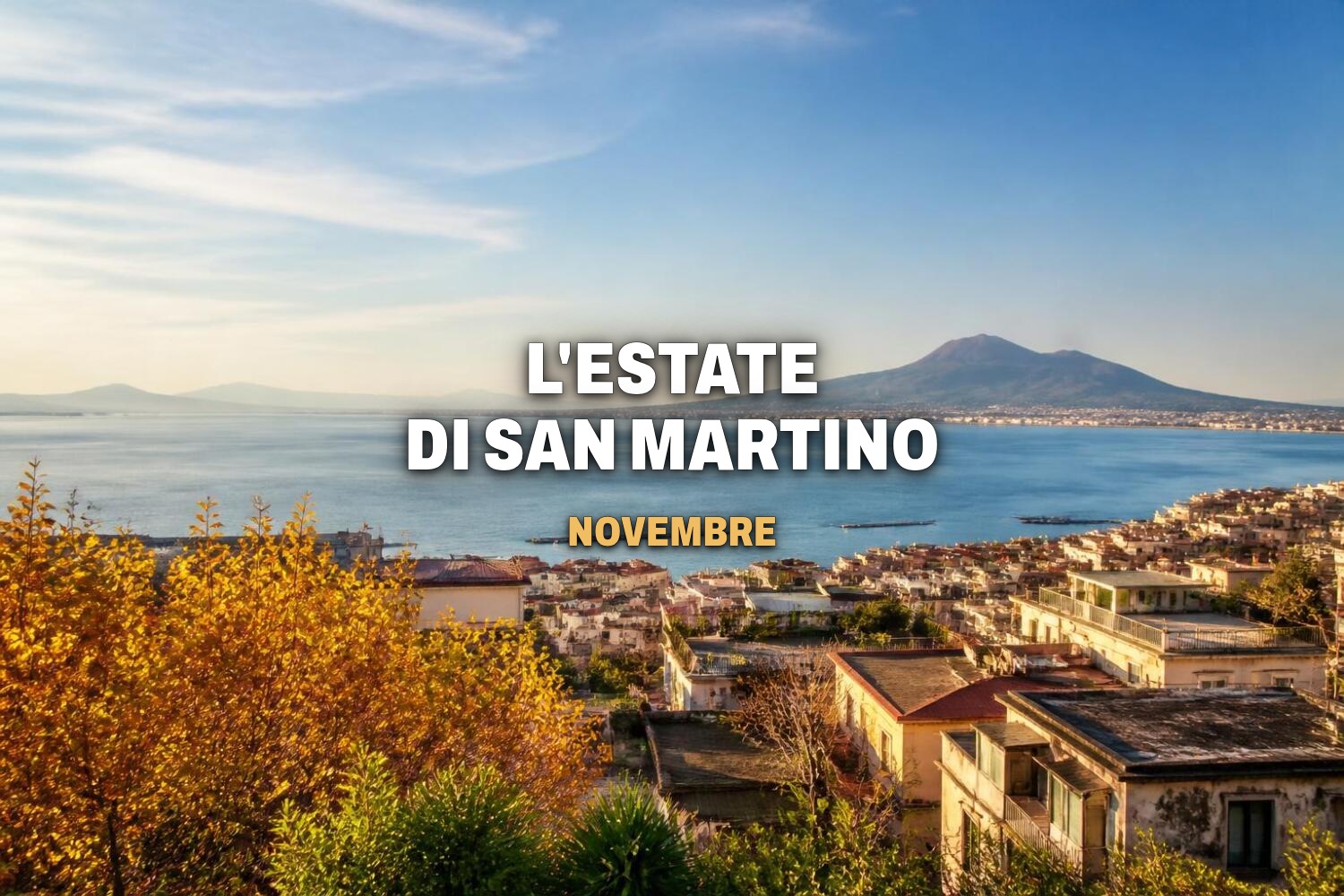
Image created with AI

Every year, around November 11th, we once again hear about Indian summer. It's neither an astronomical season nor a fixed date on the calendar: it's a period of mild weather that, after the first chills of autumn, can bring a few clear, sunny days. The name comes from the saint's feast day, and the explanation for the phenomenon comes from meteorology. It's best to keep the two separate, because tradition tells us a lot, and science only explains part of it.
What is Indian Summer?
The most precise definition comes from the Treccani Dictionary: "a series of fine days, with a noticeable increase in temperature compared to the previous days," which often occurs in Western Europe around St. Martin's Day. It's not, therefore, the return of true summer, but rather a stable break within autumn. The skies remain clear and the air is milder than the previous week.
The phenomenon is especially noticeable after a cold or rainy period. High pressure brings back good weather, the wind dies down, and highs rise, while lows remain low because the nights are now long. It can last a few days and varies in intensity every year: in some seasons, it arrives early, in others late, or not at all.
Precisely this variability makes the expression closer to everyday language than to a scientific classification. Meteorologists refer to a rising anticyclone or a stable phase, not Indian summer in official forecasts. The popular name remains useful, however, because it aptly describes the experience of those who leave home without a coat in mid-November and encounter spring-like sunshine.
Why is it called that?
On November 11, the Church celebrates Saint Martin of Tours, who died in Candes on November 8, 397, and was buried in Tours three days later, precisely on the date of his feast. The connection between the saint and the warmth of autumn arises from this, from the coincidence of the liturgical feast and the time of year when these mild days most often occur. It's no coincidence that the expression is widespread throughout much of Western Europe, where the feast was deeply felt.
The Legend of the Cloak
The best-known story is that of the cloak. According to Sulpicius Severus's Vita Martini, composed at the end of the 4th century, Martin was in Amiens, Gaul, during a particularly harsh winter. At the city gate, he saw a naked beggar begging passersby for help. Having nothing but his military cloak, he cut it in two with his sword and gave one half to the beggar.
The next night, according to the text, Martin dreamed of Christ wrapped in that same half of the cloak and heard a voice say that he had been clothed precisely through that gesture. This is a hagiographic episode, not a meteorological chronicle: the Vita Martini makes no mention of a sudden return of the sun. The idea that the sky cleared immediately after the cloak was cut belongs to later popular tradition and should be recounted as a legend.
A name widespread in Europe
In France, too, there's talk of the été de la Saint-Martin. The Académie française dictionary defines it as the eight- or ten-day period preceding or following the holiday, "because they are sometimes quite beautiful." Italian, however, has a more succinct proverb, "l'estate di San Martino dura tre giorni e un pochino," which is still in circulation and captures the idea of a brief interlude. The two expressions are not contradictory: they describe the same trend with two different measures.
What the weather says
At its base, there's almost always an anticyclone, a high-pressure area that stabilizes the atmosphere. Air descends from above, compresses, and dries, the sky remains clear, and weather disturbances are kept at bay. In November, the sun is still high enough to warm the central hours of the day, but the nights are long, and the earth rapidly loses its accumulated heat. This results in the typical mild, bright days, with cold mornings and occasional fog patches in the plains and valleys.
A climatological study by 3bmeteo, based on average maps from 1948 to 2010, shows that around November 11-14, the Azores anticyclone tends to expand from Spain toward central Europe. However, this phenomenon is not uniform: southern regions can remain on the fringes, with low pressure over the southern Mediterranean and more unstable weather. This is why Indian summer can be beautiful in the north but much less noticeable in the south in the same year.
There's no single type of high pressure. Depending on the year, mild air can arrive from the Atlantic or from the south, and the position of the anticyclone can also vary significantly. This is why two Indian summers are never entirely alike: one can bring blue skies and dry air, another higher temperatures but also clouds and fog. The constant is stability, not the thermometer.
How long does it last and how to recognize it
The Italian proverb speaks of three days and a bit, while the French dictionary speaks of eight or ten days. Sources disagree because there isn't a single, measurable event: the anticyclone positions itself differently every year. In practice, it's best to check the forecast, because the most likely window remains between November 9th and 15th, but it could shift by a few days.
The signs are easy to recognize. In the morning, it can be cold, foggy, or mist in low-lying areas; during the day, the sky clears, the wind is light, and the temperature rises above the seasonal average. In the evening, the temperature drops rapidly, as dry air and clear skies facilitate heat loss. If, however, an Atlantic low-pressure system arrives, the situation closes with rain and a further drop in temperatures.
In Naples and the Campania coast, the sea moderates temperatures because the water has stored heat during the summer and releases it slowly. This is why highs along the seafront can be more pleasant than inland, while in the countryside and valleys, nightfall falls more easily. It's no coincidence that San Martino days are often associated with the last outdoor walks before winter.
Indian Summer and October: The Differences
Ottobrata is a similar phenomenon, but occurs in October. The Treccani Dictionary defines it as an autumnal picnic, and in meteorology it refers to the particularly favorable conditions that often occur in that month, the famous Roman ottobrate. Indian summer, on the other hand, occurs around November 11th and takes its name from the saint's feast day. Both are anticyclonic pauses, but they are not the same thing and should not be used synonymously.
Then there's a difference in perception. October is associated with the joy of a day trip and the grape harvest, while Indian Summer has a more religious and rural feel, linked to celebration, new wine, and chestnuts. In Campania, the two expressions coexist, but the calendar helps distinguish them: October for the former, November for the latter.
What does it mean in Campania?
In Campania's rural tradition, November 11th is a date of transition. The barrels of new wine are tapped, the last chestnuts are harvested, and the crops are prepared for planting, while the farmers' calendar signals the approach of winter. The proverb "on San Martino every must becomes wine" sums up this intertwining of agriculture and celebration, and explains why the saint has also become the patron saint of grape harvesters and those who work the land.
The mild November days are perfect for enjoying the last weekends outdoors. In Naples, you can stroll along the seafront or climb up to Vomero and Capodimonte in a different light than usual, while in the province, the Novello and chestnut festivals take advantage of this window. If the weather holds, it's the perfect time for an outing without the summer heat or the winter chill.
Those who wish to follow tradition can combine a walk with a tasting. New wine is best drunk young, with fruity aromas and a lighter alcohol content than aged reds, and for this reason it pairs well with chestnuts, cheeses, and cured meats. Campania's wineries often organize openings and parties during the San Martino period , but it's best to check dates and times before you leave.
Frequently asked questions about Indian Summer
When is Indian Summer?
Around November 11th, the feast day of Saint Martin. It can be a few days earlier or later, and in some years it doesn't occur at all. There is no official date: the name indicates a period, not a specific event.
How long does it last?
Italian tradition speaks of three days and a bit, while French tradition speaks of eight or ten days. The actual duration varies from year to year and depends on the strength and position of the anticyclone, so it can be as short as two sunny days or as long as a week.
Why is it called that?
The name derives from the feast of Saint Martin of Tours, celebrated on November 11th. The legend of the cloak cut in Amiens is also linked to the anniversary, which is said to have given rise to the idea of a return of good weather after the charitable act. The meteorological explanation, however, is the anticyclone.
What's the difference with October?
Ottobrata falls in October and also refers to a day trip, according to the Treccani Dictionary. Indian Summer falls around November 11th and is linked to the saint's feast day. Both are periods of good weather, but in different months.
Is it always hot during Indian summer?
No. The anticyclone can be weak or shifting, and in some years November remains cold and rainy. Mild days are a statistical trend, not a guarantee: for this reason, it's a good idea to check the forecast before planning a trip.
What is the relationship with new wine?
November 11th is the traditional date when the barrels are tapped and the new wine is tasted, according to the proverb "on St. Martin's Day, all must becomes wine." The new wine festivals in Campania celebrate this very day, along with chestnuts and other autumnal produce.
Find out more from Napolike.com
Subscribe to receive the latest articles sent to your email.