
The Correale Museum in Terranova in Sorrento: how to visit it
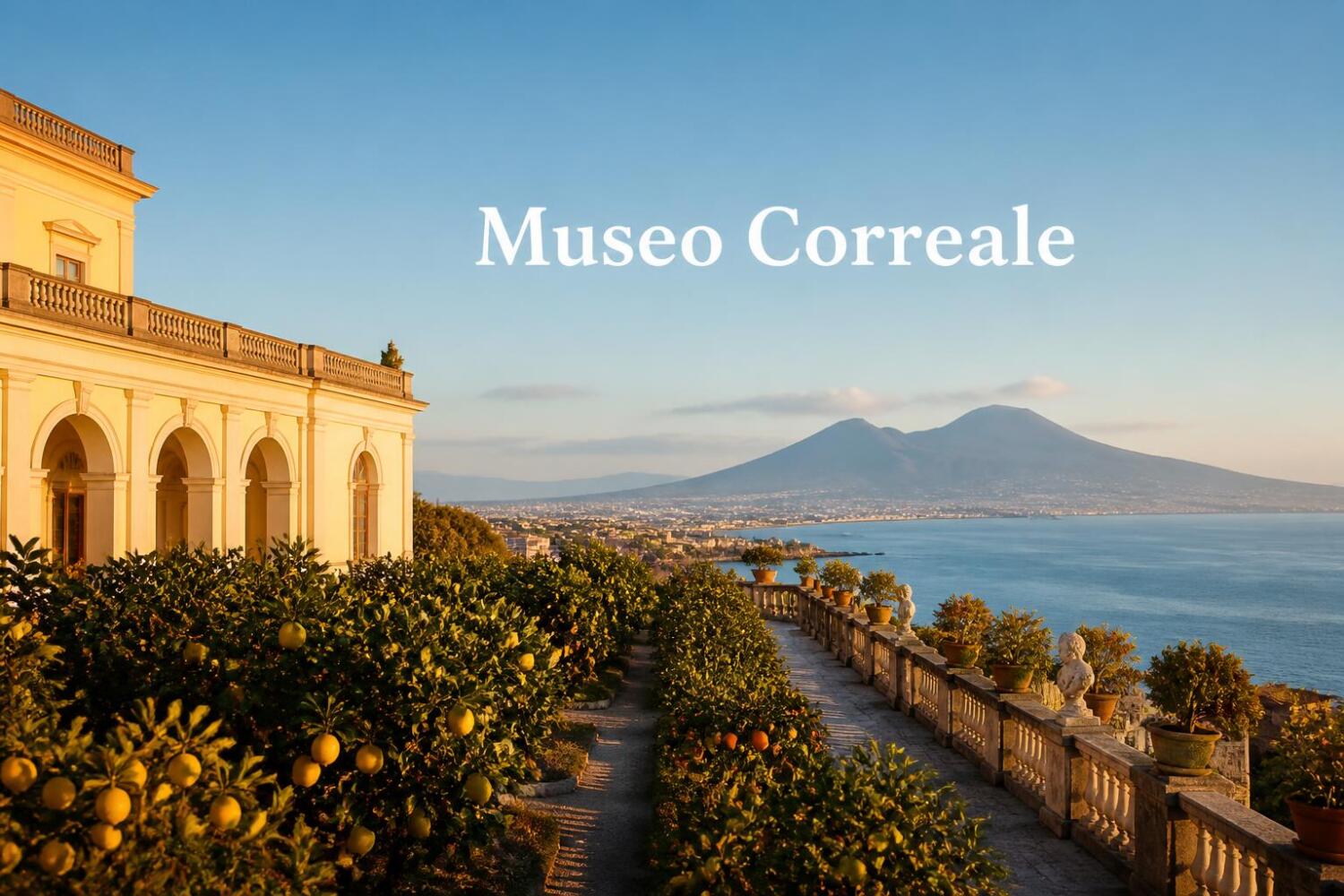
Image created with AI

The Correale Museum in Terranova is Sorrento's most important house-museum, housed in the 18th-century Villa alla Rota of the Counts of Correale. Overlooking the Gulf of Naples, it houses paintings, porcelain, furnishings, and archaeological artifacts collected by one of the peninsula's oldest noble families.
Opened to the public on May 10, 1924, by order of Counts Alfredo and Pompeo Correale , it reopened in 2026 after a lengthy restoration. Today, the archaeological section has been completely redesigned and the exhibits are richer than ever.
It's a perfect stop to understand Sorrento beyond the postcards, among citrus groves and a terrace overlooking the sea. This guide provides floor-by-floor details of what to see, including opening hours, prices, and practical tips, with information verified on the official website as of September 2026.
What to see: the visit itinerary
The visit unfolds over several levels, from the Roman basement to the third floor of porcelain. Each room retains the atmosphere of a noble residence, with furnished rooms and exhibits similar to those in the house of the Correale counts.
Allow at least an hour and a half for the entire tour, more if you want to enjoy the park at your own pace. Highlights include the archaeological section, the main floor, and the Posillipo School collection.
The archaeological section and the Roman cistern
The basement beneath the north wing houses the collection of artifacts from ancient Surrentum , which was reassembled in 2024 for the centenary. The spaces house the remains of a Roman cistern dating to the 2nd century AD, discovered during the works.
The tour recounts the Roman city in five stages: pre-Roman Surrentum, public, private, funerary, and Egyptian. Highlights include the grave goods from the necropolis discovered beneath the Hotel Excelsior Vittoria and the Base of Augustus , the most important find unearthed from Roman Sorrento.
Don't miss the black diorite statue of Pharaoh Seti I , evidence of an Egyptian cult in the area, and the sculpted sarcophagi from the city's necropolis. The artifacts were restored with the support of the MSC Foundation.
The main floor
The first floor is a sequence of furnished rooms that recreate the atmosphere of a grand noble home. Here you can admire paintings from the 15th to the 18th centuries, from the Spanish viceroyalty to the arrival of Charles of Bourbon.
Among the artists exhibited are Artemisia Gentileschi , Luca Giordano, Giovanni Lanfranco, Battistello Caracciolo, and Andrea Vaccaro. Alongside the paintings, there are fine dressers, cabinets, and secretaries embellished with Sorrento inlay.
Still Lifes and the Posillipo School
The second floor is dedicated to two genres much loved by collectors of the time: still life and landscape. Baroque compositions of flowers and fruit by Andrea Belvedere , Ruoppolo, and Ascione fill the first rooms.
The jewel in the crown is the collection of the Posillipo School , considered the most important collection of 19th-century Neapolitan landscape paintings in existence today. It includes works by Giacinto Gigante, Anton Sminck Pitloo, and Raffaele Carelli.
The third floor of porcelain
The third floor houses one of the most comprehensive porcelain collections in Italy, the fruit of the Correales' passionate collecting. It covers the major European manufacturers of the 18th and 19th centuries.
The collection ranges from Italian Capodimonte , Real Fabbrica Ferdinandea, Doccia, and Vezzi to German Meissen, Berlin, and Nymphenburg, all the way to Vienna, Sèvres, and Herend. The floor plan is completed by 18th-century Castelli and Pastore majolica.
On the mezzanine floor, before going up, stop in front of the eighteenth-century nativity scene with shepherds and the reconstruction of the landscape of the Sorrento peninsula.
The park and the Belvedere terrace
The museum's park is one of Sorrento's most beautiful green spaces. Among the flowerbeds, flanked by archaeological finds, grow a majestic centuries-old araucaria and an ancient camellia grove with three varieties of flowers.
A shady avenue of plane trees leads to the Belvedere terrace , overlooking the sea, which offers a breathtaking view of the Gulf of Naples and Mount Vesuvius. The view alone is worth the price.
In the garden, you'll also see the typical Sorrento pergola made of chestnut poles, a local agricultural technique used to protect citrus trees from wind and hail. The park hosts private events and civil weddings.
The historical library
On the ground floor is the historical library, established by the Board of Directors in 1918 to house editions of Torquato Tasso 's works and publications on local history. It is one of the most important Tasso collections.
The collection includes 16th and 17th-century works, volumes on the history of the Kingdom of Naples and the Two Sicilies, and texts on art, archaeology, botany, and medicine. Consultation is by appointment only.
The history of the museum
The villa was originally a rural farmhouse called Al Circo, which belonged to the Correale family for centuries. In the 19th century, under Count Francesco Maria Correale, it became Villa alla Rota and was transformed into one of the city's most elegant residences.
The brothers Alfredo and Pompeo Correale , the last descendants, left their family collections, the villa, and a landed estate in their will to create a museum. The wills were published in 1902, and in 1904 a Royal Decree established the institution.
During World War II, the villa was requisitioned by Allied troops and the works transferred to safekeeping. After restoration in 1947 and expansion in the 1950s, the museum celebrated its centenary in 2024.
Opening time
The museum is closed on Mondays. Tuesday through Saturday, it is open from 9:30 am to 17:30 pm, and Sundays and holidays from 9:00 am to 14:00 pm, with last admission one hour before closing.
Sunday opening hours may be extended during high season, until 17:00 PM, as indicated on the official website. Before visiting, always check the museum's dedicated page or social media channels.
Tickets and discounts
A full ticket costs €15. The reduced price of €7,5 is valid for students aged 11 to 25, Campania ArteCard holders, and FAI or Touring Club members.
Groups of 25 or more people pay €10 each, and school groups €5. Children under 10 enter free. Tickets can also be purchased online on the official Okticket platform.
There's a single Sorrento Museums ticket for €31, valid for six months, which includes the Correale Museum, the Sorrento Experience multimedia museum, and MUTA, the Sorrento marquetry museum and workshop. The total value is €40.
How to Get There
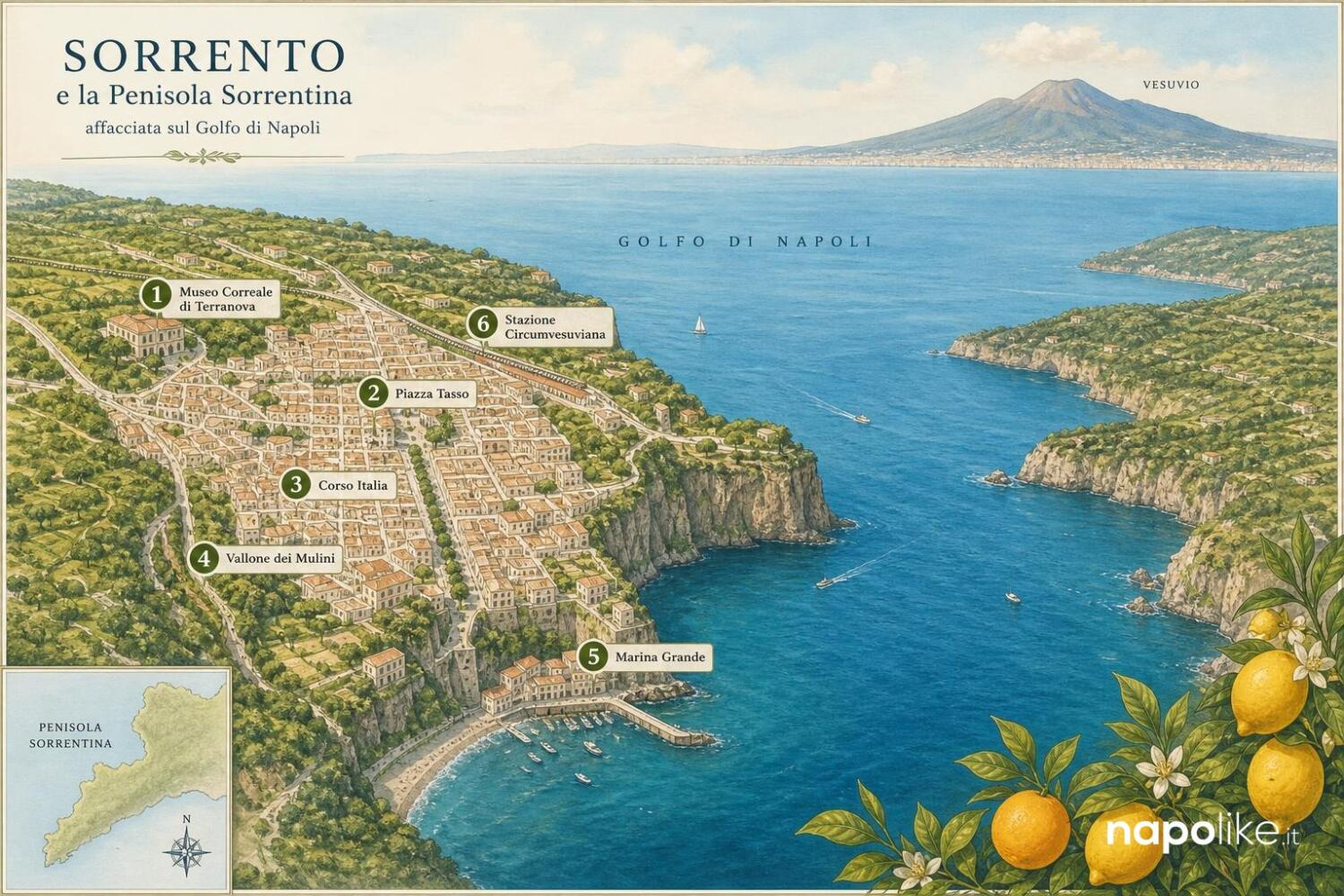
The museum is located at Via Correale 50 , about a ten-minute walk from Piazza Tasso, along Corso Italia. Those arriving by car are best off parking outside the city center and continuing on foot.
From Naples, the Circumvesuviana train arrives to Sorrento, while from Capodichino Airport, Curreri shuttle buses depart to Piazza Tasso. For trains, ferries, and parking, read the complete guide on how to get to Sorrento.
Pros and cons of the visit
Pro
- High-end collections in a true historic residence, far from the crowds of the beaches
- Park and Belvedere terrace with one of the most beautiful views of the Gulf of Naples
- Modern archaeological section with virtual reconstructions and finds from ancient Surrentum
- Museum accessible to visitors with disabilities, with a plan to eliminate barriers
- A convenient single Sorrento Museums ticket for those visiting multiple attractions in the city.
Cons
- Full ticket price is 15 euros, more expensive than other civic museums in Campania.
- Closed on Mondays, the day when many tourists visit Sorrento
- Sunday opening hours are reduced compared to the rest of the week
- The independent visit requires some preparation, captions are essential
FAQ
How long does it take to visit the Correale Museum?
An hour and a half is a good amount of time to complete the entire tour, or two hours if you want to spend time in the park and on the terrace. The archaeological section alone deserves a good half hour.
Is the museum suitable for children?
Yes, children up to 10 years old enter free, and the virtual reconstructions of Surrentum are a real hit with the little ones. The park offers plenty of space for a break between each room.
Can you visit on Sunday?
Yes, on Sundays and holidays the museum opens at 9:00 AM and closes between 14:00 PM and 17:00 PM, depending on the season. Monday is the weekly closing day.
How much is the ticket?
Full admission is €15, reduced admission is €7,5 for students, Campania ArteCard, FAI, and Touring Club members. Children under 10 are free, and the Sorrento Museums ticket costs €31.
How do you get to the museum from the center?
From Piazza Tasso, it's about a ten-minute walk along Corso Italia and Via Correale. The museum is uphill, but the walk is pleasant and well-marked.
Combine the museum with the rest of Sorrento
Want to complete your day? Start in the most beautiful villages on the Sorrento Peninsula , perfect for combining with a visit to the museum in Sorrento's center.
For the night, choose from the best hotels and B&Bs in Sorrento and the peninsula , then finish with the recommended restaurants in Sorrento and the surrounding area.
If you love walking, the Sentiero del Limone and the Vallone dei Mulini are just a short walk away. For a taste of the region, don't miss the peninsula's typical products.
We'll end with a delicious tip: buffalo mozzarella from Capaccio Paestum is the perfect stop for the next day, on the way home.
Find out more from Napolike.com
Subscribe to receive the latest articles sent to your email.