
Spanish Quarter: A Guide to Strolling Through Murals, Narrow Streets, and Tradition
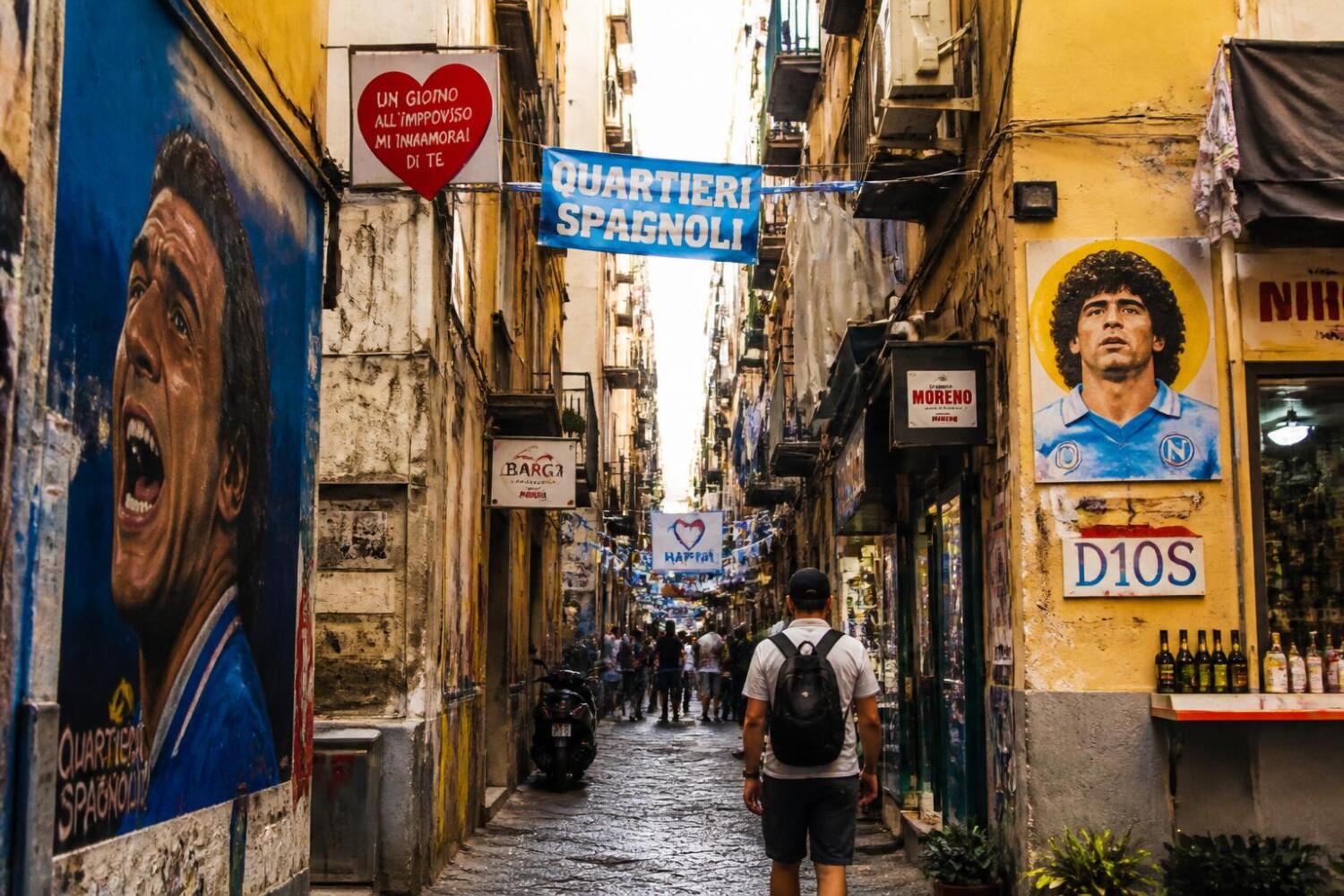
Image created with AI

Topics Covered
– Historical origins of the Spanish Quarters: the grid of alleys created in the 16th century for the Spanish garrisons
– Mural itinerary: the mural of Maradona in Vico Lungo New Theater, Sanitansamble, Bosoletti
– Exploring the alleys: tradition, artisan workshops, nativity scenes, steam washers
Via Toledo: the shopping street and the entrance to the Districts
– Where to eat: fry shops (cuoppo, wallet-shaped pizza), historic pizzerias (Di Matteo, Concettina to the Three Saints)
Piazza del PlebiscitoNaples' living room, just a stone's throw from the alleys
– Safety and practical advice: crowding, pickpocketing, best times
The history of the Spanish Quarters
The Spanish Quarter is a maze of narrow alleys between Via Toledo , Corso Vittorio Emanuele , Via Montecalvario , and Monte Echia . Built in the 16th century by order of the viceroy Don Pedro de Toledo to house the Spanish garrisons, today it is one of the most authentic and photographed places in Naples.
Their main feature is the regular grid of parallel and perpendicular alleys , a rarity in the otherwise chaotic historic center of Naples. Each alley has a name that recalls churches, professions, or local characters: Vico Belledonne , Vico San Nicola alla Carita , Vico Vecchio , Vico Lungo Teatro Nuovo.
Get inspired
Murals of Maradona
The Diego Armando Maradona mural in Vico Lungo Teatro Nuovo is the most famous and photographed in Naples. Created in 1990 by local artist Mario Filardi , it depicts the face of the Pibe de Oro and attracts visitors from around the world. Other murals dedicated to Maradona are nearby, including one in Vico Cariati and one by Jorit on Via Sanita.
Street art by Bosoletti and Jorit
Artist Bosoletti has colored the alleys with contemporary pop art, including the famous pop version of San Gennaro . Jorit has created monumental murals depicting famous people and ordinary citizens with their eyes painted red, his signature trait.
Sanitansamble
The mural by Sanitansamble (in the Sanita neighborhood, but closely linked to the Spanish Quarter) is part of the street art project that has transformed Naples into an open-air gallery.
Alleys and tradition
Strolling through the alleys, you'll encounter historic artisan workshops , handmade nativity scenes , still-operating steam washers , and small Baroque churches like the Church of Santa Maria della Mercede and the Church of San Nicola alla Carita . Every corner tells a story.
Recommended itinerary
Starting point: Via Toledo
Via Toledo is the gateway to the Spanish Quarter. Follow it until you reach Piazza Carita , where the alleys begin. Via Toledo is also Naples' main shopping street, with clothing stores, bookstores, and historic cafés like Caffe Gambrinus.
Exploring the alleys
Enter one of the side alleys (e.g., Vico Vecchio or Vico San Nicola ) and explore the internal maze, moving in a grid pattern. Every two or three blocks, you'll find a small square, a church, or a historic shop. The zigzagging path will naturally lead you to Via Chiaia or Corso Vittorio Emanuele.
Piazza del Plebiscito
Just a few minutes from the Quartieri exit, Piazza del Plebiscito welcomes you with the Royal Palace , the Basilica of San Francesco di Paola , and the neoclassical colonnade. From here, you can enjoy one of the most beautiful views of the city.
Where to eat
The Spanish Quarters are a paradise for Neapolitan street food :
Friggitoria Vomero (Montecalvario): fish cuoppo, croquettes, arancini. Average price: 3-5 euro
Wallet pizza in various fry shops: the classic Neapolitan fried pizza folded in 4. Cost: 2-4 euro
Matteo's (Via dei Tribunali): historic pizzeria with Margherita pizza for 5 euros, famous for its fried pizza
Concettina ai Tre Santi (Via Arena Sanita): contemporary pizzeria with gourmet dough, tasting menu 35-45 euro
Il Cantinone Inn (Vico Belledonne): traditional cuisine, fixed menu 15-20 euro
Not to be missed: a fish stew to go, rice balls (arancini), and zeppole made from thickened pasta.
Shopping and crafts
Handcrafted nativity scenes: shops in Vico San Giuseppe and Via San Gregorio Armeno (a few minutes' walk)
Capodimonte Ceramics: sold in various shops in the alleys
Leather bags and accessories: artisan tradition still alive
Vesuvius played: wooden souvenirs hand-painted by prisoners
Safety
The Spanish Quarters are a touristic and safe area , but as in all very busy places:
Crowding: in the narrower alleys the flow of people can be intense, especially on weekends
Pickpocketing: Keep an eye on bags, wallets and phones in the busiest alleys and on Via Toledo
Better hours: visit in the morning (9:00-12:00) for less crowds, or at sunset (17:00-20:00) for the most suggestive atmosphere
Backpacks: keep them in front, not behind
How long does it take?
For a complete exploration of the Spanish Quarter, plan on 1,5-2 hours (not including lunch stops). If you also want to visit the shops, murals, and stop for lunch, plan on 3-4 hours.
FAQ
What is the best time to visit the Spanish Quarter?
Spring (April-June) and autumn (September-October) offer the best weather. Avoid August due to the heat and tourist crowds.
Are the Spanish Quarters dangerous at night?
No more so than the rest of the historic center. They're well-attended until late in the summer, but if you're alone, it's best to stick to the brighter and busier areas.
Where does the best lap begin?
Da Via Toledo, at the height of Piazza Carita or the Toledo Metro (a station considered among the most beautiful in Europe).
How much does a guided tour cost?
Free tours start with a free donation (10-15 euros per person recommended). Private tours cost from 25 to 40 euros per person.
Can they be visited with a stroller?
Possible but not recommended: the alleys are narrow, there are steps, and the pavement is often uneven. A baby carrier is recommended.
– top 10 things to see
– street-food-guide
– Naples Underground
– Naples panoramas
– free museums
{“@context”:”https://schema.org”,”@type”:”Article”,”headline”:”Spanish Quarters: a guide to strolling among murals, alleys, and tradition”,”description”:”Complete guide to the Spanish Quarters of Naples: Maradona murals, street art, historic alleys, where to eat, recommended itinerary, and practical advice.”,”author”:{“@type”:”Person”,”name”:”Napolike”},”datePublished”:”2026-07-10T10:02:00+02:00″,”dateModified”:”2026-07-10T10:02:00+02:00″}
Find out more from Napolike.com
Subscribe to receive the latest articles sent to your email.