
The History of Neapolitan Pizza: From Poor Man's Food to UNESCO World Heritage Site
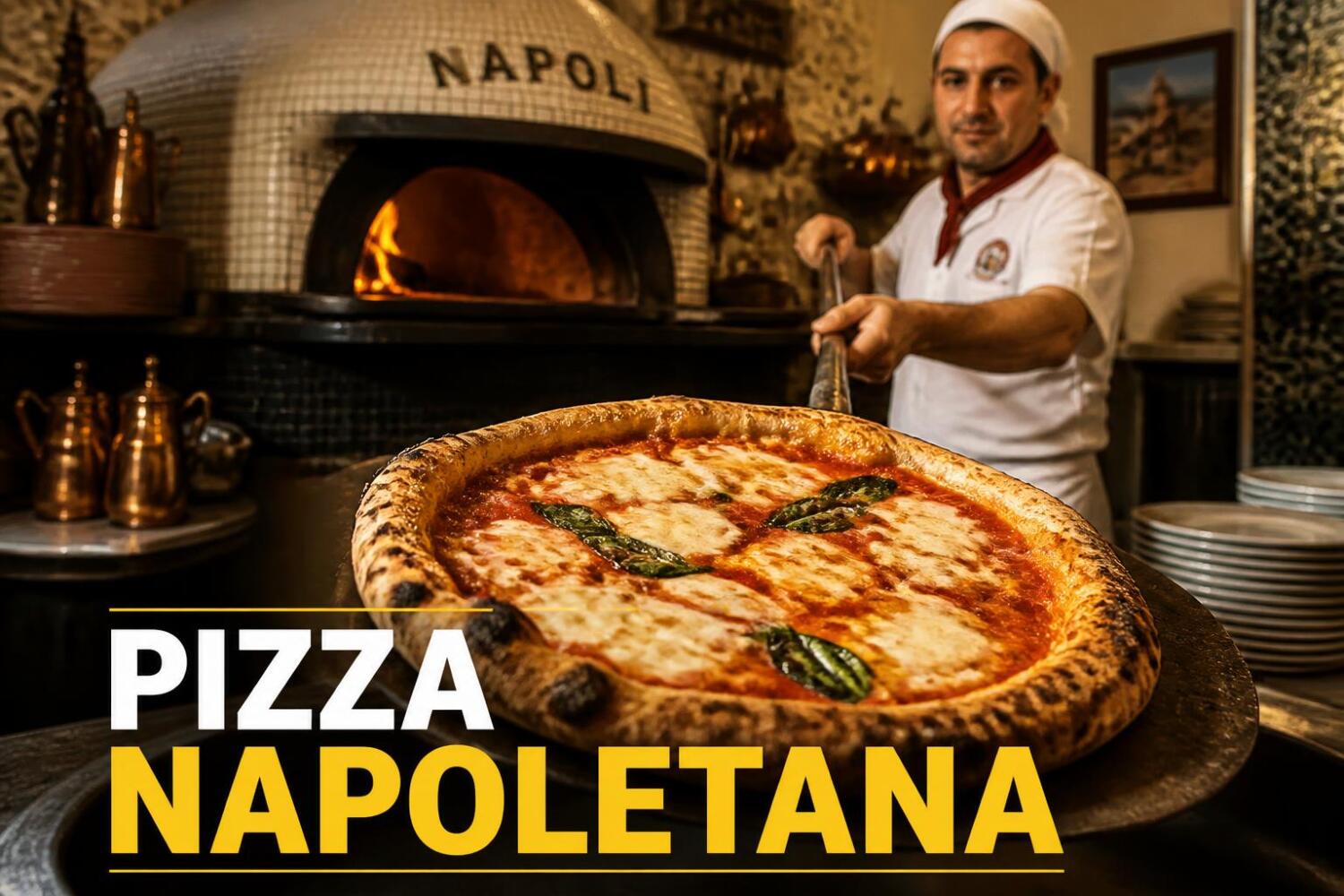
Image created with AI

Neapolitan pizza is much more than a dish: it is the symbol of Naples around the world, a centuries-long history that begins in the city's working-class alleys and ends in UNESCO's Intangible Cultural Heritage list . In this guide, we retrace the steps that transformed a street food, eaten with the hands of lazzaroni, into the most famous and imitated Italian dish on the planet.
The Origins of Pizza: From Ancient Focaccia to Naples
The ancestor of pizza is focaccia, a simple dough made from flour, water, and salt, baked on a stone or in an oven. It was already known in ancient times by the Greeks, Romans, and Egyptians. But pizza as we know it today, with its thick crust and toppings, originated in Naples in the 18th century.
At that time, Naples was one of the most populous cities in Europe, and the lazzaroni , the poorest segment of the population, needed cheap, fast food to eat on the street. Thus the first pizzaiuoli were born , who sold pizzas topped with lard, pecorino cheese, and garlic, folded in four and wrapped in paper: the first form of the pizza a portafoglio.
The etymology of the word “pizza” is still debated: some believe it derives from the Greek pitta (focaccia), others from the Lombard bizzo or pizzo (bite, piece of bread) and others from the Latin pinsa , participle of the verb pinsere , meaning “to crush, pound”, in reference to the processing of the dough.
The tomato, the revolution of the eighteenth century
Today, it's impossible to imagine pizza without tomatoes, yet for centuries there weren't any. The tomato arrived in Europe from the Americas in the 16th century , but for a long time it was considered an ornamental and even poisonous plant , because it belongs to the Solanaceae family, like belladonna.
It was the farmers of Southern Italy , starting in the 18th century , who first discovered its culinary uses. In Naples, tomatoes conquered the pizza makers' stalls and changed the history of the dish forever: with the addition of red sauce, pizza stopped being a simple topped focaccia and became the food we know today.
The first pizzeria: Port'Alba and the historic shops
As consumption grew, street stalls gave way to the first shops . The Antica Pizzeria Port'Alba , opened on Via Port'Alba at the beginning of the 19th century , is considered by many historians to be the first pizzeria in the world : here, pizza was cooked in a wood-fired oven and sold at affordable prices.
During the nineteenth century, pizzerias multiplied throughout the city, and pizza also won over nobles and travellers on the Grand Tour, who described it in their travel diaries as a surprising and “very strange” specialty.
1889, the birth of the Margherita pizza
The decisive year was 1889. On the occasion of the visit to Naples of King Umberto I and Queen Margherita of Savoy , the chef Raffaele Esposito , of the Brandi pizzeria (then “Pietro… e basta così”), prepared three varieties of pizza for the sovereign.
The one the queen liked best was the simplest: tomato, mozzarella, and basil , the three colors of the Italian flag. The pizza was named Margherita in her honor, and from that moment on, her name went down in history. The famous letter of thanks signed by the royal family is still preserved today in the Brandi pizzeria on Via Chiaia.
From the streets of Naples to the world: emigration
Between the late 19th and early 20th centuries, the great Italian emigration brought pizza overseas. In 1905, Lombardi 's opened in New York , considered the first pizzeria in the United States, its founding traditionally attributed to Neapolitan immigrant Gennaro Lombardi.
From there, pizza spread throughout the world, but with adaptations far removed from tradition: thicker, more toppings, and baked in electric ovens. Meanwhile, in Naples, the original recipe continued to be passed down from father to son, jealously guarded by the families of pizza makers.
The True Neapolitan Pizza: Ingredients and Discipline
To protect the tradition, the Associazione Verace Pizza Napoletana (AVPN) was founded in Naples in 1984 , which codified the recipe and production rules. Verace Pizza Napoletana is now a European Union product with a Traditional Speciality Guaranteed (TSG) .
The rules are precise: dough made with type 0 or 00 soft wheat flour , water, salt, and yeast; topped with San Marzano dell'Agro Sarnese-Nocerino DOP tomatoes or Piennolo del Vesuvio DOP cherry tomatoes , Campanian buffalo mozzarella DOP or fior di latte, extra virgin olive oil, and fresh basil. Baking takes place in a wood-fired oven at 485 degrees Celsius for 60-90 seconds , and the resulting pizza should have a maximum diameter of 35 centimeters with a high, slightly charred crust.
The two classic variations are the Marinara (tomato, garlic, oregano, and oil, without mozzarella, considered the oldest) and the Margherita . Added to these are the great classics of the Neapolitan tradition, such as fried pizza and pizza a portafoglio.
The 2017 UNESCO recognition
On December 7, 2017 , during the twelfth session of the Intergovernmental Committee meeting in Jeju, South Korea , the art of Neapolitan pizza making was inscribed on the UNESCO List of Intangible Cultural Heritage.
The award wasn't for the pizza itself, but for the art of pizza making : a skill comprised of gestures, rising times, turning the dough, and baking in a wood-fired oven, passed down from generation to generation in the workshops of Naples, where today approximately 3.000 pizza makers work . This recognition officially confirmed what Neapolitans have always known: pizza is culture.
Curiosities about Neapolitan pizza
- La Pizza margherita it owes its name to the queen Margherita di Savoia, in 1889.
- La Marinara pizza It's not called that because of the fish: the name comes from the fact that it was the typical meal of sailors, who ate it with just a few ingredients on board their boats.
- In Naples, pizza is eaten with your hands, folded in four, and the wallet pizza It is still one of the most loved street foods today.
- Neapolitan pizza has also appeared in the cinema: in 1954 Vittorio De Sica dedicated the episode "Pizza" of the film to pizza The gold of Naples, with a very young Sophia Loren.
- Each 17st January it is celebrated World Pizza Day, a tribute to Italy's most beloved dish.
FAQs about Neapolitan pizza
Why is pizza called Margherita?
Because in 1889 the pizza chef Raffaele Esposito prepared it in honor of Queen Margherita of Savoy , using tomato, mozzarella and basil, the colors of the Italian flag.
What's the difference between Neapolitan pizza and Roman pizza?
Neapolitan pizza has a high, soft crust, is cooked in a wood-fired oven at very high temperatures for 60-90 seconds , and is eaten by hand. Roman pizza is thinner and crispier, with a shallow crust.
When did Neapolitan pizza become a UNESCO World Heritage Site?
On December 7, 2017 , the art of Neapolitan pizza making was inscribed on the UNESCO List of Intangible Cultural Heritage of Humanity during the Committee's twelfth session in Jeju, South Korea.
What are the ingredients of a true Neapolitan pizza?
Type 0 or 00 soft wheat flour, water, salt, and yeast for the dough; San Marzano DOP tomatoes or Piennolo del Vesuvio DOP cherry tomatoes , Campanian buffalo mozzarella DOP or fior di latte, extra virgin olive oil, and basil for the topping.
Where was pizza born?
Pizza as we know it originated in Naples in the 18th century , as a street food for the lazzaroni, and spread throughout the world thanks to Italian emigration. To learn more about the history of Neapolitan flavors, you can consult our section dedicated to Neapolitan cuisine.
To learn more about the history of pizza, you can consult the Wikipedia pages on pizza , on the Margherita pizza and the official UNESCO website on the art of Neapolitan pizza making.
Find out more from Napolike.com
Subscribe to receive the latest articles sent to your email.