
Teatro San Carlo: the oldest opera house in Europe
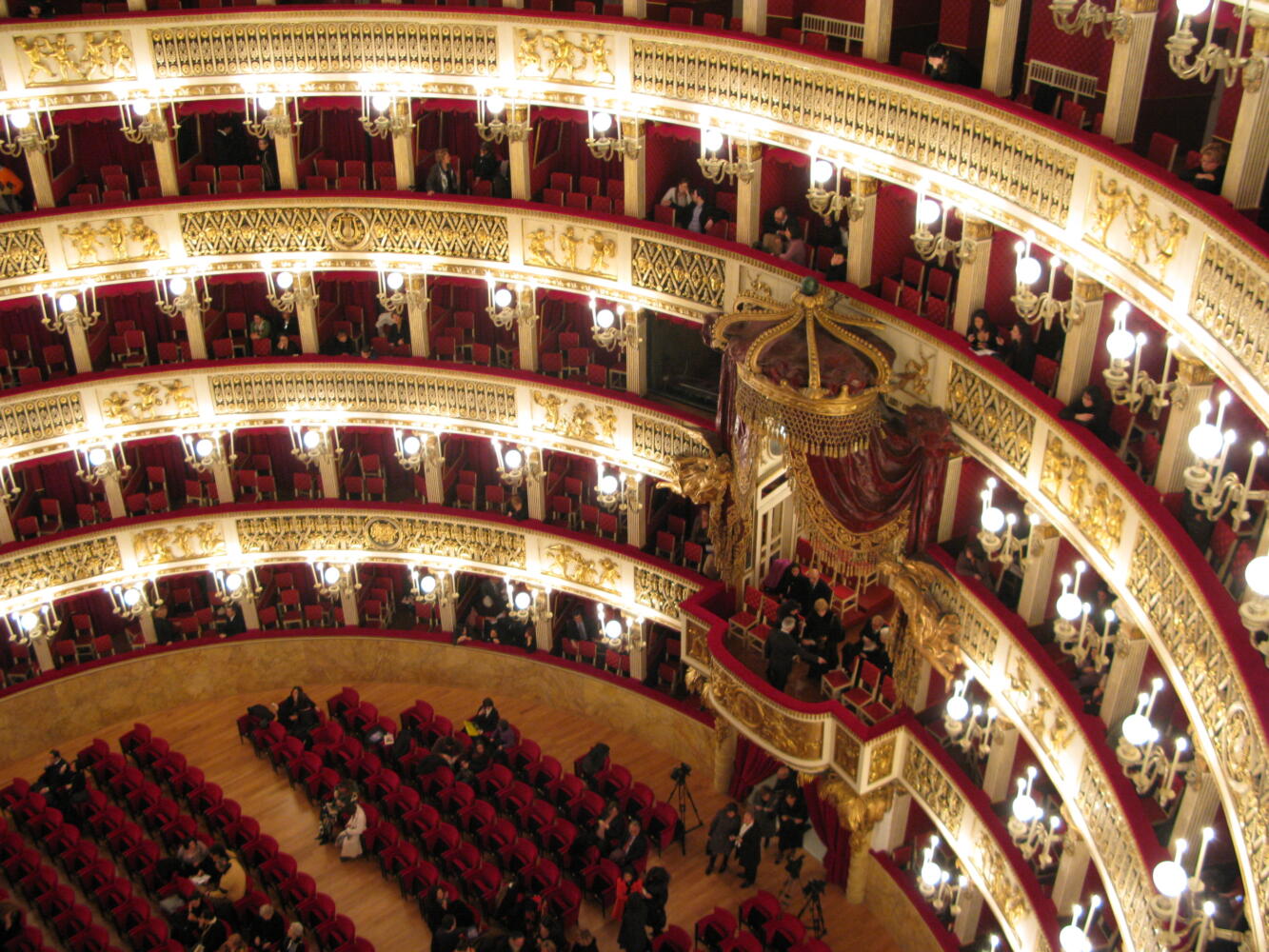
Image created with AI

The Teatro San Carlo in Naples is the oldest opera house in Europe still in operation. Founded in 1737 , its stage has seen performances by Rossini, Donizetti, Bellini, and Verdi. Today, guided tours are available in Italian and English: here's the history, opening hours, prices, and how to get there.
History: from 1737 to today
The Royal Theatre of San Carlo was commissioned by Charles III of Bourbon , who intended to give Naples a theatre worthy of its role as the capital of Europe. The project was entrusted to the architect Giovanni Antonio Medrano and the entrepreneur Angelo Carasale.
The inauguration took place on November 4, 1737 , the king's name day, with Achille in Sciro by Domenico Sarro with a libretto by Pietro Metastasio . The San Carlo opened its doors 41 years before La Scala in Milan and 55 years before La Fenice in Venice : it is the oldest opera house in the world still in operation.
Originally, it could seat over 3.000 spectators ; today, after adjustments to safety regulations, it has a capacity of around 1.400 . Its size and structure made it a model for theaters throughout Europe.
On the night between February 12 and 13, 1816, a fire destroyed much of the building. The reconstruction, entrusted to Antonio Niccolini , was completed in record time: Stendhal, who saw it, wrote that the hall had been rebuilt in three hundred days and called it a true "coup d'état" for its speed and grandeur. Niccolini also designed the neoclassical façade that still faces Via San Carlo today.
The San Carlo was the first Italian theatre to establish a dance school and hosted memorable world premieres: from Rossini's Otello and Elisabetta, regina d'Inghilterra to Donizetti's Lucia di Lammermoor (1835), up to Verdi's Alzira (1845) and Luisa Miller (1849).
"The eyes are dazzled, the soul enraptured. There is nothing in all of Europe that, I won't say, even comes close to this theater, gives the faintest idea of it."
Stendhal, 1817
Already in the eighteenth century, the San Carlo attracted the greatest names in European music: in 1752 the world premiere of Gluck's Clemenza di Tito was staged , while in 1770 the fourteen-year-old Mozart attended Jommelli's Armida abbandonata in the hall during his stay in Naples.
The Golden Nineteenth Century: Rossini, Donizetti, and Verdi
From 1815 to 1822 the musical direction of the San Carlo was by Gioachino Rossini , who experienced one of the most prolific seasons of his career in Naples, guest of the great impresario Domenico Barbaja . For the Neapolitan theatre the composer wrote the world premieres of Elisabetta, regina d'Inghilterra (1815), Otello (1816), Armida (1817), Mosè in Egitto (1818), Ermione (1819) and Zelmira (1822).
From 1822 to 1838 it was Gaetano Donizetti's turn to lead the theatre: with a contract that obliged him to compose four operas a year, he brought to the stage at the San Carlo Fausta , Maria Stuarda , Roberto Devereux and the masterpiece Lucia di Lammermoor (1835), with a libretto by Salvadore Cammarano. In 1826 Vincenzo Bellini also made his debut at the San Carlo with the world premiere of Bianca e Fernando.
The relationship with Giuseppe Verdi was intense and not without friction: Bourbon censorship initially hindered Il trovatore , but the theatre hosted the world premieres of Alzira (1845) and Luisa Miller (1849). In 1872 , at Verdi's suggestion, the "golfo mistico" was built, the pit which still houses the orchestra today.
The Twentieth Century: From Toscanini to the Great Performers
In the twentieth century, the podium of the San Carlo hosted conductors of the caliber of Arturo Toscanini (from 1909) and Victor de Sabata (from 1928). The greatest interpreters of the international scene alternated on its stage: the tenors Enrico Caruso , Tito Schipa and Giacomo Lauri-Volpi , the sopranos Renata Tebaldi , Maria Callas , Magda Olivero , Maria Caniglia and Toti Dal Monte.
The theater survived the October 1980 earthquake unscathed , when it remained open for performances by Maurice Béjart's Ballet du XXème Siècle. In the 1980s, the coat of arms of the Kingdom of the Two Sicilies was restored under the proscenium arch and a major restoration of the hall began.
The last major renovation dates back to 2008 : in five months, under the direction of architect Elisabetta Fabbri, a new foyer was built, the ceiling canvas (500 square meters, secured with approximately 1.500 nails) was restored, and the stalls seats were replaced. The theater was returned to the city in January 2009.
What to see during your visit
The guided tour allows you to admire the horseshoe-shaped hall with five tiers of boxes, the royal box , and the upper gallery. The stalls measure 22 x 28 meters, and the stage 34 x 33 meters: figures that convey the monumentality of the building.
Don't miss the coat of arms of the Kingdom of the Two Sicilies above the proscenium arch and the decorated ceiling, rebuilt after the 1816 fire with the velarium by the painter Giuseppe Cammarano , a 500-square-meter canvas depicting Apollo introducing the world's greatest poets to Minerva. Also prominent above the proscenium arch is the clock, in which Time indicates the passing of the hours while the siren of the arts attempts to hold them back.
The MeMUS , the San Carlo Museum of Memory and Music, housed in the Palazzo Reale, is currently closed to the public for its new installation . When it reopens, it will house costumes, instruments, photographs, and memorabilia related to the history of the theater and its great performers. To learn more about the monument's history, you can also consult the dedicated page for the Teatro San Carlo.
Guided tour times and prices
The Teatro San Carlo is open to the public with guided tours in Italian and English , organized in daily sessions lasting approximately 30 minutes . Tours take place daily , with entrances at 10:30, 11:30, 12:30, 14:30, 15:30, and 16:30 ; the 11:30 and 15:30 sessions are also available in English. Tours and times may vary depending on stage activity.
Ticket prices are:
- one piece rubber: 9 €
- Youth discount (under 30 and school groups): 7 euros
- Reduced groups (from 20 to 35 people): 8 euros
- Family reduction (2 adults + 2 under 18): 26 euros
Admission to each session is limited, so reservations are recommended : book by writing to visiteguidate@teatrosancarlo.it or calling 081 7972 412. Opening times and prices may vary: always check the latest information on the official Teatro di San Carlo website.
Special visits: behind the curtain
For those who want an exclusive experience, there are special 90-minute tours that take you beyond the curtain, to the most evocative places in the theatre: the Historic Hall , the boxes with their anecdotes, the Royal Box , Rossini's historic barchetta , the Hall of Mirrors , the upper gallery and the Cammarano velarium seen up close, the Terrace of the Romantic Garden , the artists' dressing rooms and the Room dedicated to Renata Tebaldi.
Special tours cost €450 for groups of 1 to 5 participants , €950 for groups of 5 to 10 , and €1.800 for groups of 10 to 20. They are not suitable for people with walking difficulties or children under 8. Reservations are required by email or telephone.
How to Get There
The theatre is located in via San Carlo 98/F , between Piazza del Plebiscito and Piazza Trieste e Trento , in the heart of the historic centre of Naples, a UNESCO World Heritage Site.
- Metro: Line 1, stops Municipality (Select) o Toledo (then a few minutes walk)
- By car:The theater is in a limited traffic zone; it's best to park outside the center and continue on foot.
The location is ideal for combining the visit with other itineraries: from Naples' castles to the city's panoramas and viewpoints . If it's your first time in the city, start with the itinerary recommended in the Naples in 1, 2, or 3 Days guide.
Useful Tips
Arrive a few minutes before your booked time: access is staggered, and groups depart at fixed times. Bring identification if you're taking advantage of reduced fares. The tour is almost entirely standing, with stops in various areas of the theater.
The booking and information service is available Monday through Friday from 10:00 am to 1:30 pm and from 2:00 pm to 5:30 pm, and Saturdays from 10:00 am to 2:00 pm. You can call +39 081 7972 412 or email visiteguidate@teatrosancarlo.it . Tours may be canceled or modified for technical or artistic reasons, even at the last minute.
Before or after the tour, take advantage of the central location for a stroll in Piazza del Plebiscito , in the Royal Palace or in the nearby Galleria Umberto I.
FAQ
How much does it cost to visit the Teatro San Carlo?
The full ticket costs 9 euros , with reductions of 7 euros for young people under 30 and school groups, 8 euros for groups of 20 to 35 people and 26 euros for the family ticket (2 adults + 2 under 18).
When was the Teatro San Carlo built?
The theatre was built in 1737 by order of Charles III of Bourbon and inaugurated on 4 November 1737.
What are the guided tour times?
Tours are held daily at 10:30, 11:30, 12:30, 14:30, 15:30, and 16:30 . Tours at 11:30 and 15:30 are also in English. Each tour lasts approximately 30 minutes.
How long does the guided tour last?
The regular guided tour lasts approximately 30 minutes ; the special behind-the-curtain tours last 90 minutes.
How do you get to the Teatro San Carlo?
By metro Line 1 , Municipio or Toledo stops , or on foot from Piazza del Plebiscito.
Is it really the oldest opera house in the world?
Yes: the San Carlo is the oldest opera house in the world still in operation , inaugurated 41 years before Milan's La Scala.
Find out more from Napolike.com
Subscribe to receive the latest articles sent to your email.