
Lidia Poët, the true story of the first Italian female lawyer
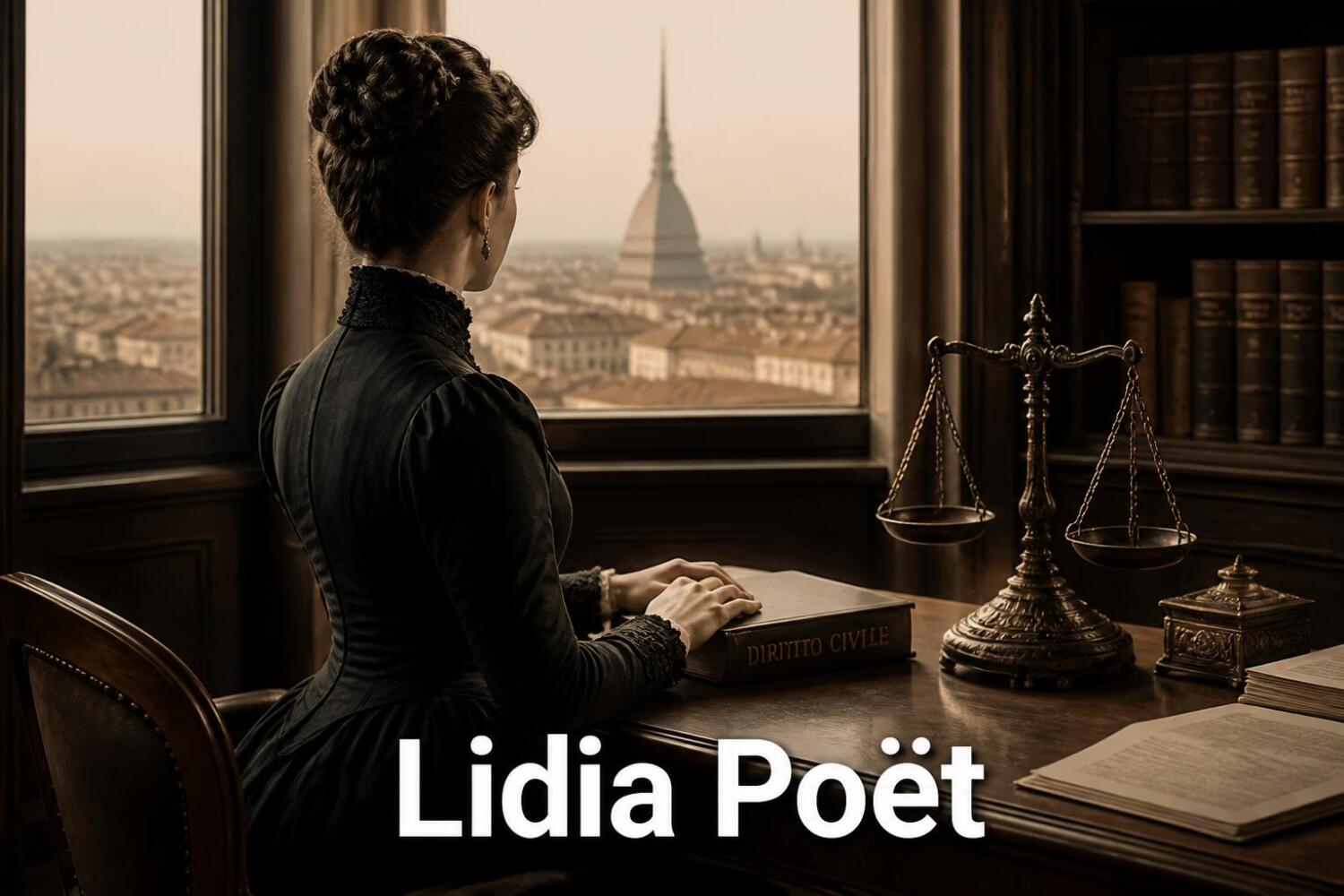
Image created with AI

While the series La legge di Lidia Poët debuts on free-to-air Rai 1 , the true story of the protagonist deserves to be told: Lidia Poët (1855-1949) was the first woman admitted to practice law in Italy , in a path marked by obstacles, battles and recognition that only came in 1920.
Studies and graduation
Born in Perrero , Piedmont, Lidia Poët obtained a teacher's license in German, French, and English and a high school diploma in Mondovì. She first enrolled in Medicine, then switched to Law , graduating in Turin in 1881. Two years later, she passed the qualifying exam and applied to be registered in the Register of Lawyers and Solicitors.
Registration in the Register and cancellation
The Council of the Turin Bar Association approved the application with eight votes in favor out of twelve: on August 9, 1883, Lidia Poët became the first woman to be admitted to the Bar in Italy . An achievement that was short-lived.
The King's Attorney General appealed the decision, and on November 11, 1883 , the registration was annulled by the Turin Court of Appeal and the Supreme Court of Cassation. The reasons reflected the cultural climate of the time: the legal profession was considered "only for men to practice," "unbecoming" for a woman to get agitated in the law school gym, and the "strange and bizarre clothing" imposed by fashion was even cited as a reason for not taking female judgments seriously.
The battles and the recognition
Lidia Poët did not give up: she continued to work in her brother Giovanni Enrico 's law firm , taking on the most difficult causes, particularly those concerning the rights of minors, prisoners and women.
In 1919, the law allowing women to hold public office was passed, and the following year, at the age of 65 , Lidia Poët was finally able to become a lawyer: the first woman in Italy to achieve this recognition. She died on February 25, 1949 , at the age of 94, after having dedicated her entire life to fighting for women's emancipation and the protection of the most vulnerable groups.
Find out more from Napolike.com
Subscribe to receive the latest articles sent to your email.