
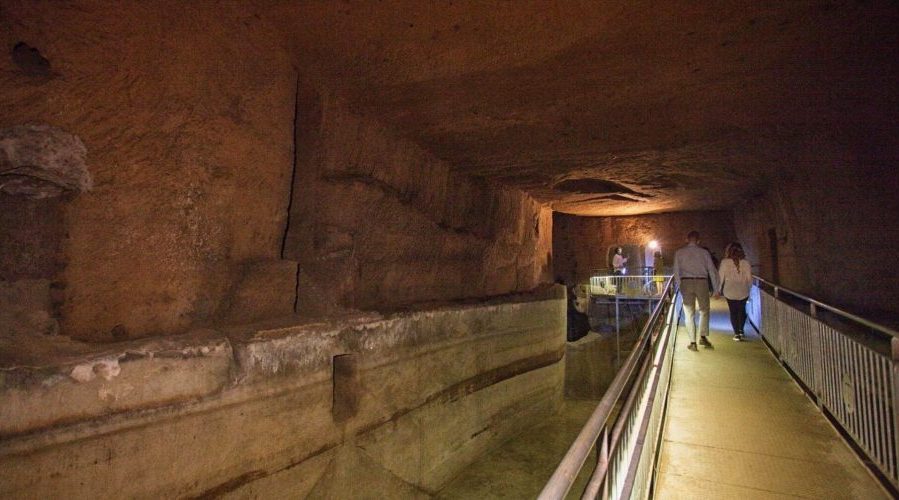
In Naples the Water Museum will open under the Basilica of Pietrasanta with paths, plays of light, melodies and streams in the tuff cisterns!
Next autumn 2020 Naples will be enriched with a new museum which will be called Water museum and will come to life in basements of the Basilica della Pietrasanta.
This beautiful church, which for years has occasionally hosted various types of exhibitions, among the most famous those organized by Vittorio Sgarbi, has already activated the Lapis Museum with an underground path and, in a few months, he will make you visit what will be the Submerged Naples.
The underground tanks: submerged Naples opens
This new project foresees the reopening of ancient tuff tanks, of which Naples is rich, which were functional until 1885. Thanks to the ABC, the municipal company for the management of public water and the Pietrasanta Association, the hydraulic works will begin. inaugurated in October 2020.
The path will be easily accessible also to disabled people and for those with walking difficulties thanks to a useful lift.
As many know, the large underground tanks came used during the Second World War as shelters by the population during the bombing and today they will take on new life thanks to the visit route.
The Cistern of the Prince between play of light and sound
One of the two tanks is called del Principle of use because it is located under the Palazzo del Principe Gaetano Filangieri d'Arianello and is the largest in the historic center with its length of 10 meters and its width of 20 meters. It is 5 meters deep and has a capacity of 400 cubic meters.
It will be the most important attraction because they will also be there exposed streams, melodies created by water e light games. There will also be grate, the cavities used by the "pozzari" to clean the cisterns. To make it more impressive, it has already been restored the electrical system with the same copper wires as those used during the Second World War.
They will not fail multimedia and interactive panels, installations to explain the history of the cisterns, infographics. Of course, the history of the cisterns and how the water was taken will also be explained, as well as the history of the tuff quarries used by the Greeks in the XNUMXth century to build the city.
