
Myths and legends of Naples: ghosts, mysteries and superstitions
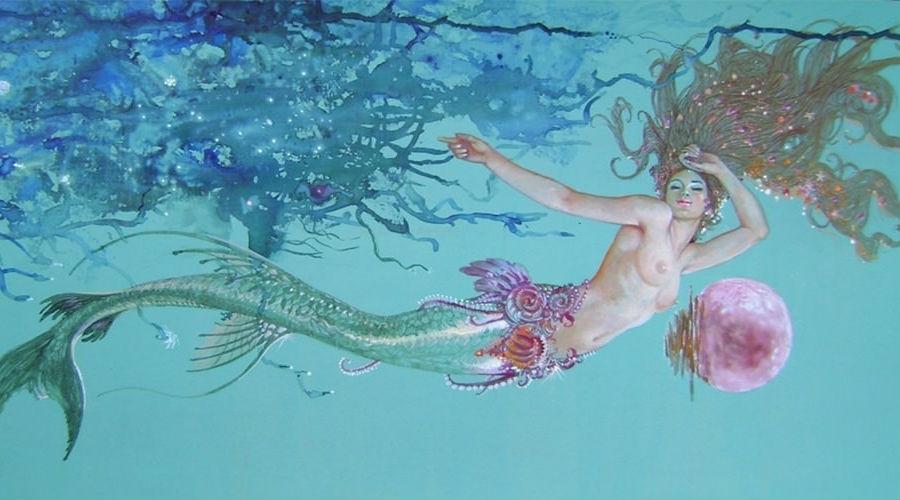
Image created with AI

Legends, myths and stories about ghosts, spirits and witches in the city of Naples.
Myth and legend have always shrouded Naples, and the city's history is rich in secrets, ghost stories, benevolent spirits, and evil specters that are still part of the beliefs of its citizens today. The very story of the city's founding has its roots in one of the most famous legends, that of the Siren Parthenope, so much so that one of the adjectives used to identify its citizens is still "Neapolitan."
Between Munaciello, Bella 'Mbriana, the magic egg of Castel dell'Ovo , the ghosts in the palaces and fortresses and the witches, there are many tales that have been handed down for many generations and that make Naples a city full of mystery.
Legends of Partenope
They are two the most famous legends on the figure of Partenope, considered the founder of Naples. The first derives from the Odyssey of Homer, in which it is said that Ulysses was the only one not to suffer the effects of the melodious singing of the three sirens, causing them to commit suicide. The body of one of the three, Partenope, was dragged to theislet of Megaride, where today stands the Castel dell'Ovo, and then dissolve, and according to the myth was transformed into the current landscape of the city.
The second version tells that Partenope was a Greek girl in love with Cimone whose love was opposed by his father. The two decided to flee, arriving on the Neapolitan coasts, and here the woman began to be hailed by the citizens because on its way the earth became more and more fertile.
La Bella 'Mbriana
Bella 'Mbriana is a benevolent spirit who lives in the homes of Neapolitans, bringing them good luck. She coexists with Munaciello, whose antagonist she is. Her exact appearance is unknown, as she appears fleetingly during the brightest hours or in the early afternoon, and when spotted, she magically transforms into a gecko , an animal considered to bring good luck. According to legend, Bella 'Mbriana was a beautiful princess who lost her love and, alone and desperate, began wandering the city. Her father, the king, asked his subjects to open the doors of their homes to welcome her. This is why she is considered the spirit that protects the home.
'O Munaciello
The Munaciello is a mischievous spirit who lives in homes. He can bring both good luck and bad luck, and wears a monk's robe that hides his ugly features. According to Matilde Serao, he was a real character, the deformed son of Caterinella Frezza, a wealthy woman who fell in love with a farmhand against her father's wishes, resulting in a hideous-looking son. Legend has it, however, that he was a well manager who entered homes through the drains to steal valuables. People attribute magical powers to him and blame him for unpleasant incidents, but they also consider him benevolent because he often leaves coins in hidden places around the house.
The legend of Castel dell'Ovo
Castel dell'Ovo on the Naples seafront owes its name to an ancient legend involving Virgil . The Latin poet, also considered a magician in the Middle Ages, is said to have hidden a magic egg in the castle's dungeons to ensure it would never collapse. Indeed, its eventual breaking would cause the destruction of the fortress and the entire city. The egg has never been found, but it is said to be in a container of water in an iron cage hanging from an oak beam in a room in the dungeons. In the 16th century, a collapse of the arch caused panic among the inhabitants, and Queen Joanna I was forced to swear she had replaced the egg.
Ghosts of Castel Sant'Elmo
According to an ancient legend, a ghost dressed in white roams Castel Sant'Elmo in Vomero , enjoying scaring anyone who approaches. He's very playful and even likes to emerge from the walls to spread a bit of terror. Another legend is linked to the Castle, referring to the screams some say can be heard from the dungeons . Indeed, at the end of the first flight of the Pedamentina staircase is a gate through which the royal guards killed their enemies and threw their bodies into the dungeons to be eaten by rats or even by the city's inhabitants. The screams are thought to be the moans of these victims.
Myth of Posillipo and Nisida
According to an ancient myth, Posillipo was a graceful and playful young man , with a very sensitive heart, who fell in love with a beautiful woman named Nisida . The girl, though very charming, had a cold soul and a heart of stone; she was an enchanting but wicked girl. The boy, suffering from the love he could not have, could not bear the pain and decided to commit suicide at sea. The gods decided to transform him into the current island, while Posillipo was transformed into the hill opposite. By their will, Nisida is home to "murderers and thieves" (today it is a juvenile prison), while Posillipo Hill attracts everyone with its beauty.
Crocodile with the Maschio Angioino
A legend, recounted by both Croce and Dumas, tells of the presence of a ravenous crocodile in one of the pits of the Maschio Angioino . Used to lock up prisoners requiring more severe punishment, it became a mysterious place because they disappeared for no apparent reason, until the animal's presence was discovered. It is said that it arrived in Naples from Egypt with Queen Joanna II, who exploited it to feed the lovers she wanted to eliminate. From then on, it was used to eliminate the most inconvenient people in the kingdom, but it was Ferrante of Aragon who had it killed by suffocating it with a horse's leg.
Legend on the Palazzo della Gaiola
The Villa on the islet of Gaiola is considered a place of bad luck , as in recent decades its owners have suffered various misfortunes, even death. Among the most notable are Gianni Agnelli, who suffered the deaths of many of his family members, and Paul Getty, whose nephew was kidnapped by the 'Ndragnheta. The story is based on the first owners, an Englishwoman and her nobleman husband, who fell in love with his sister-in-law . The wife, feeling betrayed, began to ferociously accuse her sister, wounding her so much that the young woman took her own life. The man shot himself out of grief, while his wife went mad, and for this reason the Villa is said to be surrounded by jinx (bad luck).
Spirits of Palazzo Donn'Anna
The Palazzo di Posillipo takes its name from Donna Anna Carafa, granddaughter of Luigi Carafa di Stigliano, who purchased the building in 1571. It is said that during one of the magnificent receptions Donna Anna loved to host at the Palazzo, she surprised her lover Gaetano di Casapesenne kissing the young Donna Mercedes de las Torres. In the following days, Donna Mercedes disappeared, and it was speculated that Donna Anna had poisoned her soul, leaving the poor, desperate Gaetano to search for her. Since then, according to legend, the three spirits have wandered the Palazzo and will do so forever.
The Witch of Vesuvius
The story of a witch on Vesuvius has been told since 1858, the year of a powerful eruption of the volcano that caused a huge amount of magma to escape. From that moment on, a blood-curdling scream began to be heard every night, leading locals to believe someone was in terrible pain.
After countless and fruitless searches, the citizens decided to turn to a local witch to solve the mystery. "'A vecchia 'e Mattavona," as she was called, managed to silence the cries by uttering incomprehensible magic words.
La Janara
The Janara is an evil witch whose legend originated in the Benevento area, soon spreading to Naples. She is considered the daughter of Satan , which is why God rendered her sterile. Frustrated and envious, she wanders the city's houses, especially seeking children. She knows the occult and can perform black magic, evil eye, and spells. According to myth, she can be spotted at night , and if you're skilled at capturing her by grabbing her hair, you can neutralize her. This is provided you answer her question, "What are you holding in your hand?" correctly, saying "Iron and steel," not "hair." If you capture her while she has not assumed corporeal form, you will receive protection for seven generations.
Find out more from Napolike.com
Subscribe to receive the latest articles sent to your email.